Main Home How it works The science Pricing FAQ Contact Us Blog Services ADHD Brain Screening Comprehensive Assessment Family Package Medication Scan Who it’s for Children (6+) Adults Women & girls Teenagers ADHD Support Support hub Results explained What to do next GP appointment guide Coping strategies Medication guide Workplace rights Women & girls Parent's guide Guides NHS waiting list Evidence for your GP EHCP evidence Access to Work Right to Choose Psychiatric assessment ADHD diagnosis guide Book a scan
Home The science
Peer-reviewed research

The neuroscience behind ADHD brain screening

Private ADHD assessments give you a clinician's opinion based on conversation. We give you quantitative brain data based on decades of published neuroscience. Here's the science that makes it possible.

What's actually different about ADHD brain activity?

Every brain produces electrical signals as neurons communicate with each other. These signals oscillate at different frequencies, and we can measure them from the scalp using electroencephalography (EEG). In people with ADHD, research consistently shows that the pattern of these oscillations is different from the general population.

Specifically, the ADHD brain tends to produce more theta activity (slow waves associated with drowsiness, mind-wandering, and unfocused states) and less beta activity (faster waves associated with alertness, focused attention, and active processing). This imbalance is quantified as the theta/beta ratio (TBR) — and it's the most extensively studied EEG biomarker for ADHD in the scientific literature.

Cortical hypoarousal: the brain that's trying harder

The prevailing neurological model for ADHD is cortical hypoarousal. The frontal cortex — responsible for executive function, sustained attention, impulse control, and working memory — operates at a lower arousal state than typical. This isn't laziness or a lack of effort. The ADHD brain is often working harder to achieve the same level of focus, because the neurological baseline makes sustained attention physiologically more difficult. Our guide to the ADHD brain explains how this affects dopamine, working memory and emotional regulation in everyday life.

This is why stimulant medications (methylphenidate, amphetamines) work paradoxically in ADHD: they increase cortical arousal to a more typical level, making it easier to focus. It's also why the theta/beta ratio tends to normalise when effective medication is taken — something we can objectively measure with a pre/post medication comparison scan. See our full medication guide for all UK options including titration and side effects.

2.44:1
Typical adult theta/beta ratio at Cz — a healthy brain in an alert resting state produces roughly 2-3 times more theta than beta power at the central midline.

Why the ratio matters more than the raw values

Raw EEG power values vary enormously between individuals due to skull thickness, scalp conductance, and electrode contact quality. But the ratio between two frequency bands measured at the same electrode is remarkably stable — because whatever is affecting the absolute values affects both bands equally. This is what makes TBR a robust biomarker: it's self-normalising.

An elevated TBR — typically above 3.0-4.5 depending on age group — suggests the brain's balance is tipped toward slow-wave dominance. In the context of ADHD symptoms (inattention, hyperactivity, impulsivity), this provides objective neurological evidence that the frontal cortex may not be achieving adequate arousal for sustained attention.

How quantitative EEG technology works

Quantitative electroencephalography (qEEG) is a method of recording and analysing the electrical activity produced by the brain. It has been used in clinical neurology since the 1920s, when German psychiatrist Hans Berger first demonstrated that electrical potentials could be measured from the human scalp. Modern qEEG builds on this foundation by applying digital signal processing techniques to extract precise frequency-domain information from raw EEG recordings.

Electrode placement and the 10-20 system

Our screening uses four electrode sites positioned according to the international 10-20 system, a standardised method for placing EEG electrodes that ensures consistent measurement locations across different subjects and sessions. The primary sites are Cz (central midline, at the vertex of the scalp) and Fz (frontal midline, above the forehead), with supplementary recordings at F3 (left frontal) and F4 (right frontal). Electrode Cz is the critical measurement point — this is the exact site specified in the FDA's NEBA System clearance and the site used in the majority of published ADHD TBR research. The frontal sites provide additional data on executive function regions and help identify lateralised differences in cortical arousal.

Signal acquisition and processing

The electrodes detect microvolt-level electrical potentials generated by synchronised neuronal activity in the cerebral cortex. These raw signals are amplified, digitised at a sampling rate sufficient to capture frequencies up to 45 Hz, and then processed using Fast Fourier Transform (FFT) analysis. The FFT decomposes the complex raw EEG signal into its constituent frequency components, revealing how much power (measured in microvolts squared per hertz) is present at each frequency. This is analogous to splitting white light through a prism to reveal its component colours — except instead of colours, we see the relative contributions of delta, theta, alpha, beta, and gamma frequency bands.

Artifact rejection and quality control

Raw EEG data contains artifacts from sources other than brain activity, including eye blinks, muscle tension, jaw clenching, and electrical interference. Our processing pipeline identifies and removes these artifacts before computing the final frequency analysis. This is critical because muscle artifacts can artificially inflate beta power, and eye movement artifacts can contaminate frontal recordings. Each recording undergoes visual inspection and automated artifact rejection to ensure the computed theta/beta ratio reflects genuine cortical activity rather than noise. We also monitor impedance (the electrical contact quality between electrode and scalp) throughout the recording to ensure signal quality meets clinical standards.

The neuroscience of ADHD: dopamine and the prefrontal cortex

The cortical hypoarousal pattern measured by qEEG reflects underlying neurochemical differences in the ADHD brain. Research from neuroimaging and pharmacological studies has established that ADHD involves dysregulation of the dopaminergic and noradrenergic neurotransmitter systems, particularly in the prefrontal cortex and its connections to the basal ganglia and cerebellum. Dopamine plays a critical role in sustaining attention, filtering irrelevant stimuli, maintaining motivation for non-rewarding tasks, and regulating executive function. In ADHD, dopamine signalling in the prefrontal cortex is believed to be insufficient, leading to reduced cortical arousal that manifests as elevated slow-wave (theta) activity on EEG.

This dopamine hypothesis explains several key observations. First, it explains why stimulant medications (methylphenidate, lisdexamfetamine) are effective in ADHD — they increase dopamine availability in the prefrontal cortex, raising cortical arousal to more typical levels. Second, it explains why the theta/beta ratio tends to normalise when effective medication is taken, something we can objectively measure with a pre/post medication comparison scan. Third, it explains why individuals with ADHD often perform well on tasks that are inherently stimulating or novel (which naturally increase dopamine) but struggle with routine, repetitive, or low-reward tasks (which do not). The qEEG captures this prefrontal arousal state directly, providing a neurological snapshot that complements the behavioural observations made during clinical assessment.

Norepinephrine, the second key neurotransmitter implicated in ADHD, regulates alertness and the brain's signal-to-noise ratio — its ability to distinguish important stimuli from background noise. Reduced noradrenergic function contributes to the distractibility and difficulty filtering irrelevant information that characterises ADHD. Medications like atomoxetine and guanfacine target this system specifically. While qEEG cannot directly measure neurotransmitter levels, the cortical arousal patterns it detects are the downstream consequence of these neurochemical differences, making the theta/beta ratio an indirect but reliable indicator of the underlying neurobiology. For a full overview of UK medication options, see our ADHD medication guide.
From laboratory research to FDA-cleared diagnostic aid

The journey from research finding to clinical tool took decades. Here are the key milestones that established TBR as a credible ADHD biomarker:

1999

Monastra et al. — the foundational study

Published in the journal Biological Psychiatry, this landmark study demonstrated that TBR at electrode Cz could differentiate ADHD from non-ADHD children with high accuracy. It established the clinical protocol still used today and set age-specific thresholds that became the basis for normative databases.

2001

Clarke et al. — subtype differentiation

Australian researchers showed that different ADHD subtypes produce distinct EEG profiles. Combined-type ADHD showed elevated theta/beta, while predominantly inattentive type showed different patterns. This was significant because it demonstrated EEG's potential to provide subtype information that questionnaires alone cannot.

2012

Ogrim et al. — clinical validation

A Norwegian study validated the clinical utility of TBR in a large sample, confirming that elevated theta/beta ratio at Cz was a consistent finding across multiple clinical settings, not just controlled research environments. This helped bridge the gap between laboratory research and real-world clinical application. Our screening uses the same methodology — see how it works.

2013

FDA clears the NEBA System (De Novo K112711)

The United States Food and Drug Administration cleared the Neuropsychiatric EEG-Based Assessment Aid (NEBA) System as the first brain wave test to help assess ADHD in patients aged 6-17. The device measures theta and beta frequencies at electrode Cz and computes the ratio. The FDA determined it was safe and effective as a diagnostic aid when used alongside standard clinical evaluation.

2013

Arns et al. — the definitive meta-analysis

Published in the Journal of the American Academy of Child and Adolescent Psychiatry, this meta-analysis pooled data from 1,498 ADHD subjects and 1,289 controls across multiple studies. It confirmed that TBR is significantly elevated in ADHD with a large effect size (d = 0.62), establishing it as the single most replicated neurobiological finding in ADHD research.

2016

AAN Practice Advisory

The American Academy of Neurology published a practice advisory confirming that TBR-based EEG assessment has clinical value as a supplementary tool. They reported accuracy of 89-94% when combined with clinical evaluation, and recommended it should not be used as a standalone diagnostic but acknowledged its significant value as supportive evidence.

The five frequency bands and what they mean

Your brain produces electrical oscillations across a spectrum of frequencies. We decompose this spectrum into five standard bands using Fast Fourier Transform (FFT) analysis. Each band reflects a different aspect of your brain's functional state.

1-4 Hz
Delta
Deep sleep, unconscious processing. Elevated delta in an awake resting state may indicate excessive drowsiness or cortical slowing.
4-8 Hz
Theta
Daydreaming, mind-wandering, unfocused states. Elevated theta in ADHD reflects the cortical hypoarousal model. Key component of TBR. We measure this.
8-13 Hz
Alpha
Relaxed alertness, eyes-closed calm. Alpha increases with eyes closed ("alpha blocking"). May be elevated in anxiety comorbidity.
13-30 Hz
Beta
Active thinking, focused concentration, alert processing. Reduced beta in ADHD reflects insufficient cortical arousal for sustained attention.
30-45 Hz
Gamma
Higher cognitive processing, binding of information, perception. Relatively less studied in ADHD but included for completeness.

In a typical ADHD profile, you see elevated theta relative to beta — particularly at electrode Cz (central midline) and Fz (frontal midline). The frontal electrodes (F3, F4) provide additional data on beta power in the left and right frontal cortex, where executive function is primarily regulated.

What elevated theta activity looks like in the ADHD brain

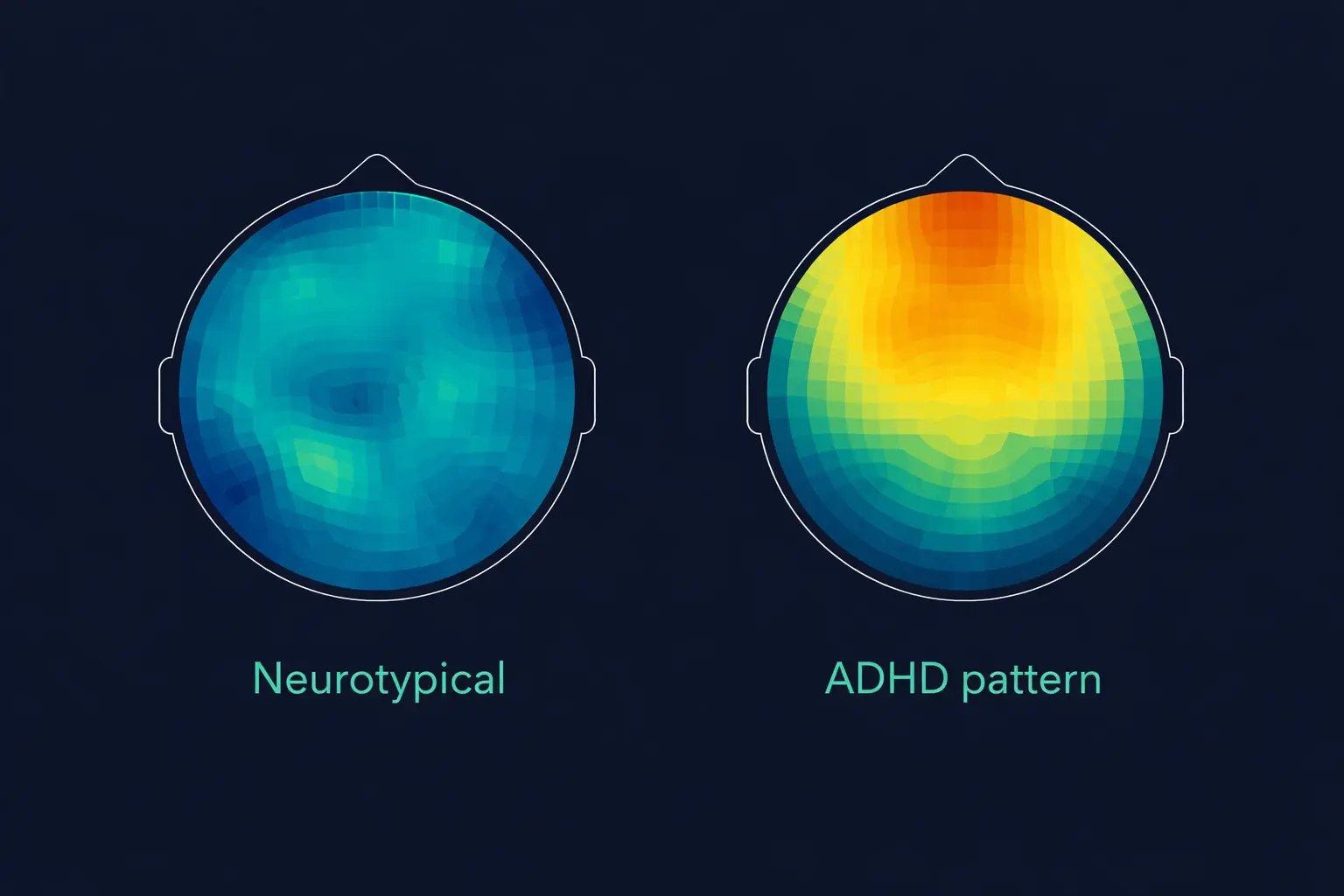
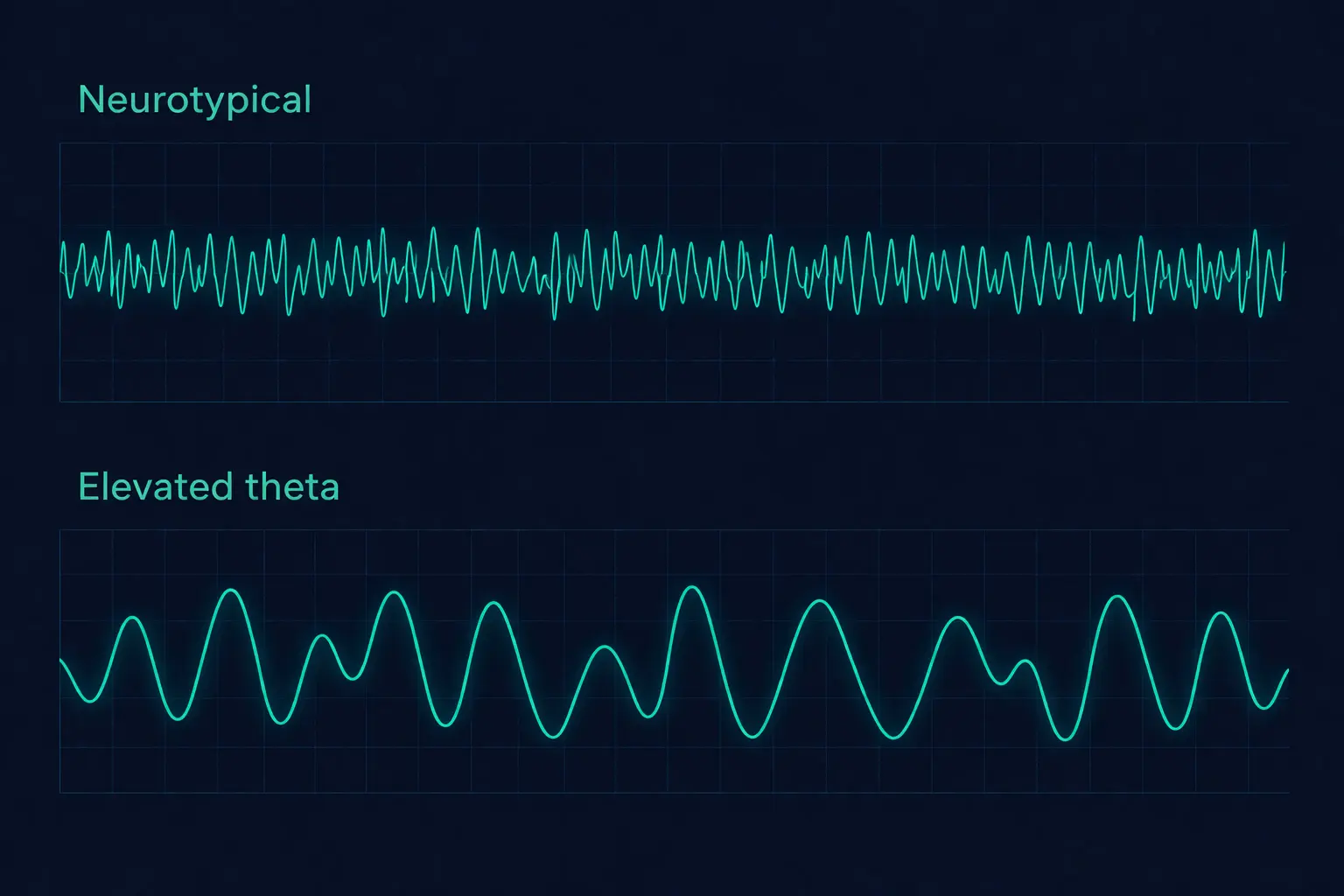
The images below illustrate the core neurological pattern we screen for. In an ADHD brain, slow-wave theta activity dominates the frontal and central regions — precisely where attention and executive function are regulated. This is the cortical hypoarousal pattern that the theta/beta ratio captures, and the pattern that decades of published research have consistently documented.

Brain topography heatmap comparison showing elevated frontal theta activity in ADHD versus neurotypical brain pattern
Theta activity: neurotypical vs ADHD
Topographic maps showing the distribution of theta power across the scalp. The ADHD pattern shows elevated theta concentrated in frontal and central regions — the areas responsible for attention and executive function.
EEG waveform comparison showing slower theta-dominant oscillations in ADHD versus faster beta-dominant neurotypical brain waves
Brain wave patterns: fast vs slow
Neurotypical brains show faster, tighter beta-dominant oscillations during focused tasks. ADHD brains show slower, higher-amplitude theta waves — reflecting the cortical underarousal that the theta/beta ratio measures.
Illustrative visualisation based on published research patterns — not individual client data

311 subjects, 6 published sources, 10 age groups

Every brain screening is only as good as the reference data it's compared against. We've built our normative database from six peer-reviewed research sources supplemented by computed norms from open-access EEG datasets containing 311 real subjects.

311
Total research subjects
168
Control subjects
143
ADHD subjects
10
Age groups (6-60+)

Our computed norms (used in every screening and family package) from the Mendeley open-access dataset show a Cohen's d of 1.364 between ADHD and control groups — a large effect size confirming that TBR reliably separates ADHD from non-ADHD populations. Adult control TBR averaged 6.03 ± 5.93, while adult ADHD TBR averaged 17.19 ± 9.94 — nearly three times higher.

How z-scores work and what they mean for your screening

Every screening result in our report is expressed as a z-score — a standardised statistical measure that tells you exactly how far your brain activity deviates from the age-matched healthy average. Z-scores are used throughout clinical medicine and psychology because they provide a universal scale for comparison, regardless of what is being measured.

A z-score of 0 means your result is exactly at the population average. A z-score of +1.0 means your result is one standard deviation above the average — approximately the 84th percentile. A z-score of +2.0 means you are two standard deviations above average — the 98th percentile. For theta/beta ratio specifically, a z-score above +1.5 at electrode Cz is generally considered clinically significant for ADHD screening purposes, indicating that your TBR is substantially elevated compared to the normative population.

The advantage of z-scores over raw values is context. A raw theta/beta ratio of 4.5 means very different things for a 7-year-old child versus a 45-year-old adult, because TBR naturally decreases with age as the brain matures. By converting raw values to z-scores using age-matched normative data, we can compare any client — regardless of age — against their appropriate reference group. A z-score of +2.1 for a 7-year-old and a z-score of +2.1 for a 45-year-old both indicate the same degree of deviation from their respective age norms, even though their raw TBR values would be very different.

Our reports present z-scores both numerically and visually, using a colour-coded scale that shows where your result falls relative to the normative distribution. This makes the data immediately interpretable for clinicians who may not be familiar with qEEG technology — they can see at a glance whether your brain activity pattern is within normal limits, borderline, or significantly elevated. This visual clarity is one of the reasons GPs and psychiatrists find our reports useful for supporting referral letters and EHCP applications. Our results explained guide walks through every section of the report in detail.

The peer-reviewed sources behind our normative data

Every comparison in our reports is traceable to published, peer-reviewed research. Here are the six primary sources that underpin our normative database.
Source Year Subjects Key finding
Arns et al.
J Am Acad Child Adolesc Psychiatry
2013 1,498 ADHD
1,289 controls
Meta-analysis confirming elevated TBR in ADHD with effect size d=0.62. The definitive study establishing TBR as the most replicated ADHD biomarker.
Monastra et al.
Biological Psychiatry
1999 482 subjects Foundational study demonstrating TBR at Cz differentiates ADHD from controls. Established age-specific thresholds still referenced today.
Clarke et al.
Clinical Neurophysiology
2001 184 subjects Demonstrated distinct EEG profiles for ADHD subtypes. Combined-type shows elevated theta; inattentive type shows different patterns.
Ogrim et al.
Behavioural and Brain Functions
2012 133 subjects Clinical validation of TBR in real-world settings. Confirmed that findings from controlled studies replicate in clinical practice.
Snyder et al.
Clinical EEG and Neuroscience
2015 275 subjects Large-scale validation study following FDA clearance. Confirmed clinical utility of NEBA-style TBR assessment in prospective cohort.
Nasrabadi et al.
IEEE / Mendeley Dataset
2020 121 subjects Open-access dataset with 61 ADHD + 60 control children. 19 channels, 128 Hz. We compute our own norms from this raw data.

qEEG brain screening vs questionnaire-based assessment

The current standard of care for ADHD assessment in the UK relies almost entirely on subjective tools: clinical interview, behavioural rating scales (Conners, SNAP-IV, DIVA-5), teacher observations, and developmental history. These are valuable — but they measure reported behaviour, not brain function.

A qEEG screening measures what's actually happening inside the brain. The two approaches answer different questions, and they're most powerful when used together.

Questionnaire-based assessment

  • Based on subjective report and observation
  • Relies on self-awareness and recall accuracy
  • Vulnerable to impression management
  • Doesn't measure brain function directly
  • Same questions for every patient
  • No objective comparison against norms
  • Can't measure medication response
  • £700-£1,500 for a private assessment

qEEG brain screening

  • Based on measured electrical brain activity
  • Objective — your brain can't fake a TBR
  • Not influenced by expectation or motivation
  • Directly measures cortical arousal state
  • Results compared against 311+ research subjects
  • Z-scores show exact deviation from norms
  • Pre/post scans objectively track medication effect
  • From £595 with same-day report

Better together: the combined approach

We don't position qEEG as a replacement for clinical assessment — we position it as the missing piece. The American Academy of Neurology found that accuracy reaches 89-94% when TBR data is combined with clinical evaluation. That's higher than either approach alone. Your clinician brings their expertise in behavioural presentation, differential diagnosis, and treatment planning. We bring the brain data they don't have access to. Our comprehensive package (£845) includes a clinical letter designed for your GP or psychiatrist.

This is why our tagline is "private ADHD assessments give you an opinion — we give you the data." Both are necessary. But until now, only one was available. Whether you're on the NHS waiting list, pursuing Right to Choose, or going private — brain data makes every pathway stronger. Our results explained guide walks you through exactly what your report means, and our GP appointment guide includes scripts for presenting your data.

How qEEG data is used in practice

The scientific evidence behind the theta/beta ratio translates directly into practical clinical value across multiple pathways. Understanding how your qEEG data can be used helps you get the most from your screening investment.

Supporting GP referrals and NHS assessment

The most common use of our screening data is to strengthen a GP referral for formal ADHD assessment. When a GP writes a referral letter to CAMHS or an adult ADHD service, having objective neurological data alongside the standard behavioural observations makes the referral significantly more compelling. Several of our clients have reported that their GP fast-tracked referrals after seeing elevated TBR z-scores in our reports, because the objective data provided the clinical justification needed to prioritise the referral. For families stuck on the NHS waiting list, this can mean the difference between years of waiting and months.

Right to Choose and private assessment

Under the NHS Right to Choose framework, patients can request referral to a private provider (such as Psychiatry-UK) for ADHD assessment at NHS cost. These referrals are more likely to be accepted when supported by objective evidence of clinical need. A qEEG report showing significantly elevated theta/beta ratio provides exactly this kind of evidence. For those pursuing fully private psychiatric assessment, presenting qEEG data to the assessing psychiatrist gives them an additional neurological data point that complements their clinical interview and behavioural rating scales.

Educational and workplace applications

Our reports are increasingly used to support Education, Health and Care Plan (EHCP) applications for children, where objective neurological evidence strengthens the case for additional school support, exam access arrangements, and specialist provision. For adults, the same data supports Access to Work applications and workplace reasonable adjustment requests under the Equality Act 2010. Because qEEG data is quantitative and comparable against normative databases, it carries weight in formal applications where subjective assessments alone may be questioned. See our full guide to ADHD workplace rights for more detail on what you are legally entitled to.

Medication monitoring

One of the most scientifically compelling applications of qEEG is objective medication monitoring. Because stimulant medications work by increasing cortical arousal, the theta/beta ratio typically decreases (normalises) when effective medication is taken. A pre/post medication comparison scan provides hard data showing whether your medication is producing the expected neurological change, whether a dosage adjustment might be needed, or whether a particular medication class is having the desired effect. This removes the guesswork from medication titration and gives both patients and prescribers objective evidence to guide treatment decisions.

What TBR can and cannot tell you

We believe in transparent science. Here's what the theta/beta ratio does well, and where its limitations lie:

What TBR is good at

TBR is a reliable population-level biomarker. Across thousands of subjects in meta-analyses, ADHD groups consistently show elevated TBR compared to controls. It has a large effect size (d = 0.62-1.36 depending on the study), making it one of the strongest neurobiological findings in ADHD research. When combined with clinical evaluation, it improves diagnostic accuracy to 89-94%.

What TBR cannot do alone

TBR is not a standalone diagnostic. Not all individuals with ADHD show elevated TBR — particularly those with predominantly hyperactive-impulsive presentation, or women who present with inattentive symptoms. A normal TBR does not rule out ADHD. Conversely, elevated TBR can occasionally occur in other conditions such as excessive drowsiness, certain medication effects, or fatigue. This is precisely why clinical context matters, and why our reports are designed to supplement — never replace — qualified clinical assessment.

The Arns (2013) controversy

The same meta-analysis that confirmed TBR's validity also noted that effect sizes have decreased in more recent studies compared to earlier ones. Some researchers interpret this as TBR becoming less reliable; others argue that earlier studies had more clearly differentiated samples. We take the conservative position: TBR is a clinically useful biomarker that provides valuable supporting data, and it should always be interpreted alongside comprehensive clinical evaluation. The same data supports school EHCP applications and Access to Work claims.

ADHD and comorbidities: what else can affect your results

ADHD rarely occurs in isolation. Research published by the National Institute for Health and Care Excellence (NICE) estimates that up to 80% of individuals with ADHD have at least one co-occurring condition. Common comorbidities include anxiety disorders, depression, autism spectrum conditions, dyslexia, oppositional defiant disorder (in children), and sleep disorders. Some of these conditions can influence EEG patterns independently — for example, anxiety may increase beta activity (potentially masking an elevated TBR), while depression may increase theta activity (potentially inflating TBR even without ADHD). Sleep deprivation can significantly elevate slow-wave activity and produce a falsely elevated theta/beta ratio.

This is exactly why we emphasise that qEEG screening data should always be interpreted within a broader clinical context. A skilled clinician who reviews your qEEG report alongside your developmental history, behavioural symptoms, and any known comorbidities can distinguish between an elevated TBR caused by ADHD and one caused by other factors. Our reports include notes on recording conditions and any observations that may affect interpretation, ensuring that the clinician receiving the data has the context needed to use it appropriately.

Who should consider a qEEG screening?

A qEEG screening is most valuable for individuals who suspect ADHD but want objective data before committing to a full clinical assessment, families with children on long NHS waiting lists who need evidence to expedite referrals, adults who have spent years wondering whether their difficulties with focus, organisation, and time management might have a neurological basis, women and girls who are statistically underdiagnosed due to the inattentive presentation being less visible, parents who want to screen multiple siblings to identify which children may benefit from formal assessment, and individuals already on ADHD medication who want objective evidence of whether their treatment is producing the expected neurological change. If any of these situations apply to you, our ADHD brain screening provides the objective data point that traditional assessment pathways do not offer.

What your professional reports look like

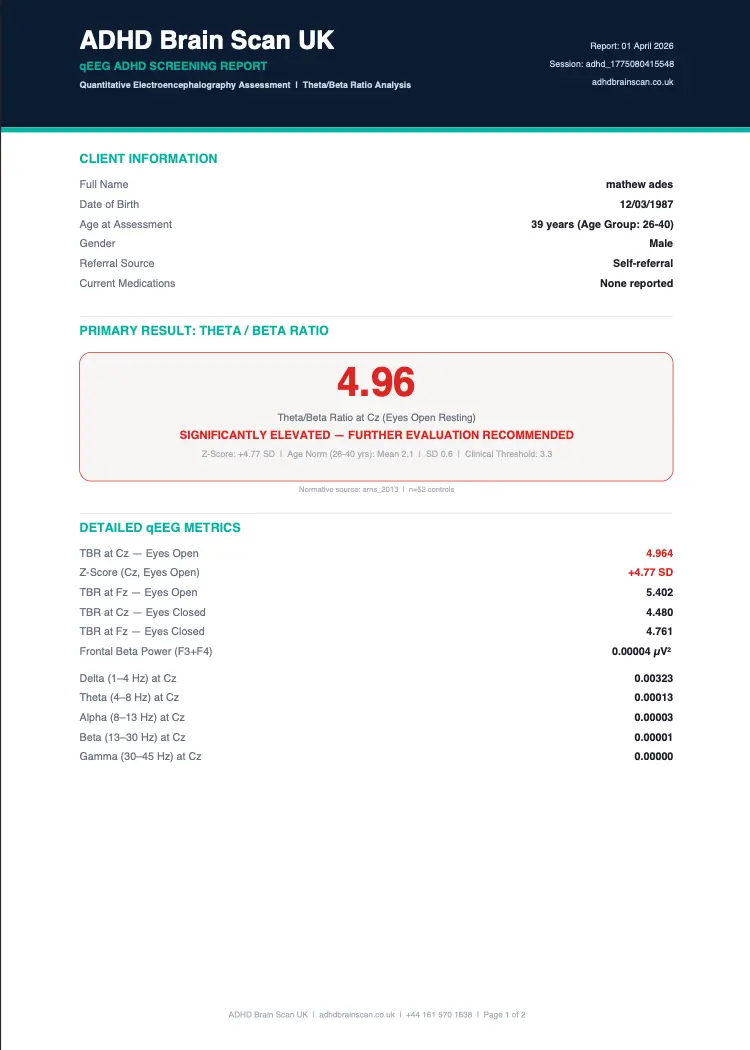
ADHD Brain Scan UK professional PDF report showing theta beta ratio z-scores
Individual child report
Each child receives their own report with age-matched z-scores and normative comparisons.
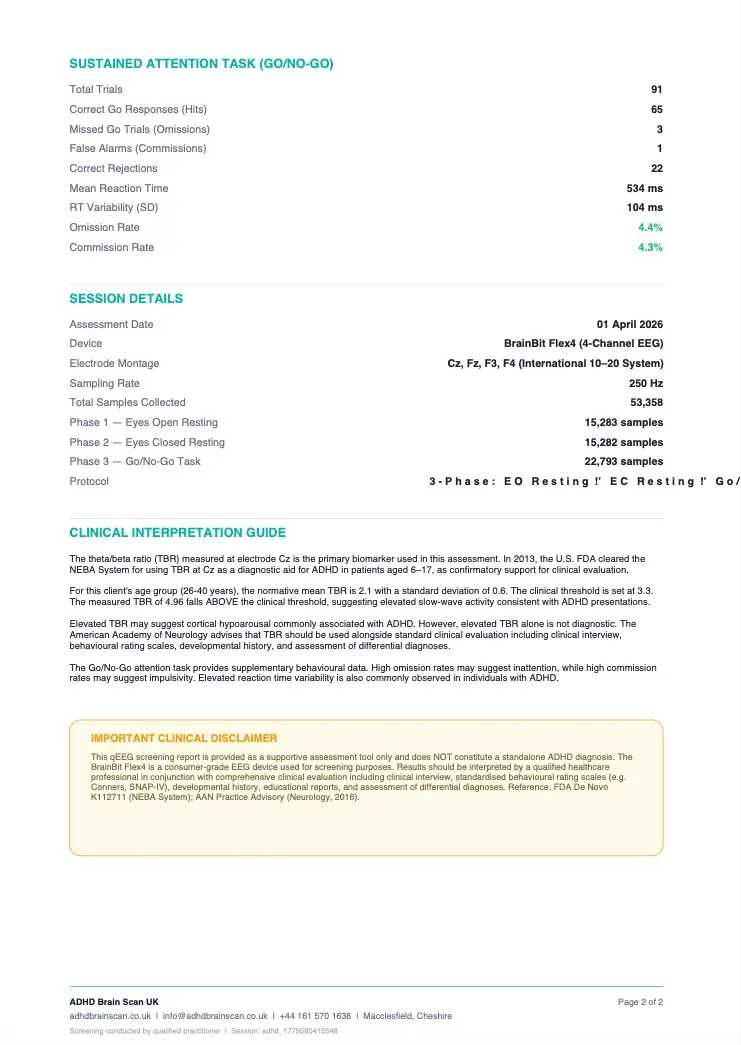
Detailed qEEG frequency band analysis and attention task results
Detailed results breakdown
Full frequency spectrum and Go/No-Go attention task results for each child individually.

Content reviewed by qualified professionals

MS
Mathew Sherborne
Founder & Lead EEG Technician — ADHD Brain Scan UK

Certified EEG technician with hands-on experience conducting over 200 qEEG screenings. All scientific content on this page is based on published peer-reviewed research and follows the methodology established by the FDA-cleared NEBA System (2013).

Last reviewed: April 2026  ·  Sources: Arns et al. (2013), Monastra et al. (1999), FDA NEBA Clearance, NICE NG87

What happens during a screening

A 60-second look at the ADHD brain screening experience.

The science is clear. The question is: what does your brain show?

Book your ADHD brain screening and find out. Same-week appointments available.

Book a screening → See how it works
Explore: ADHD support hub · women & girls · teenagers · children 6+ · adults