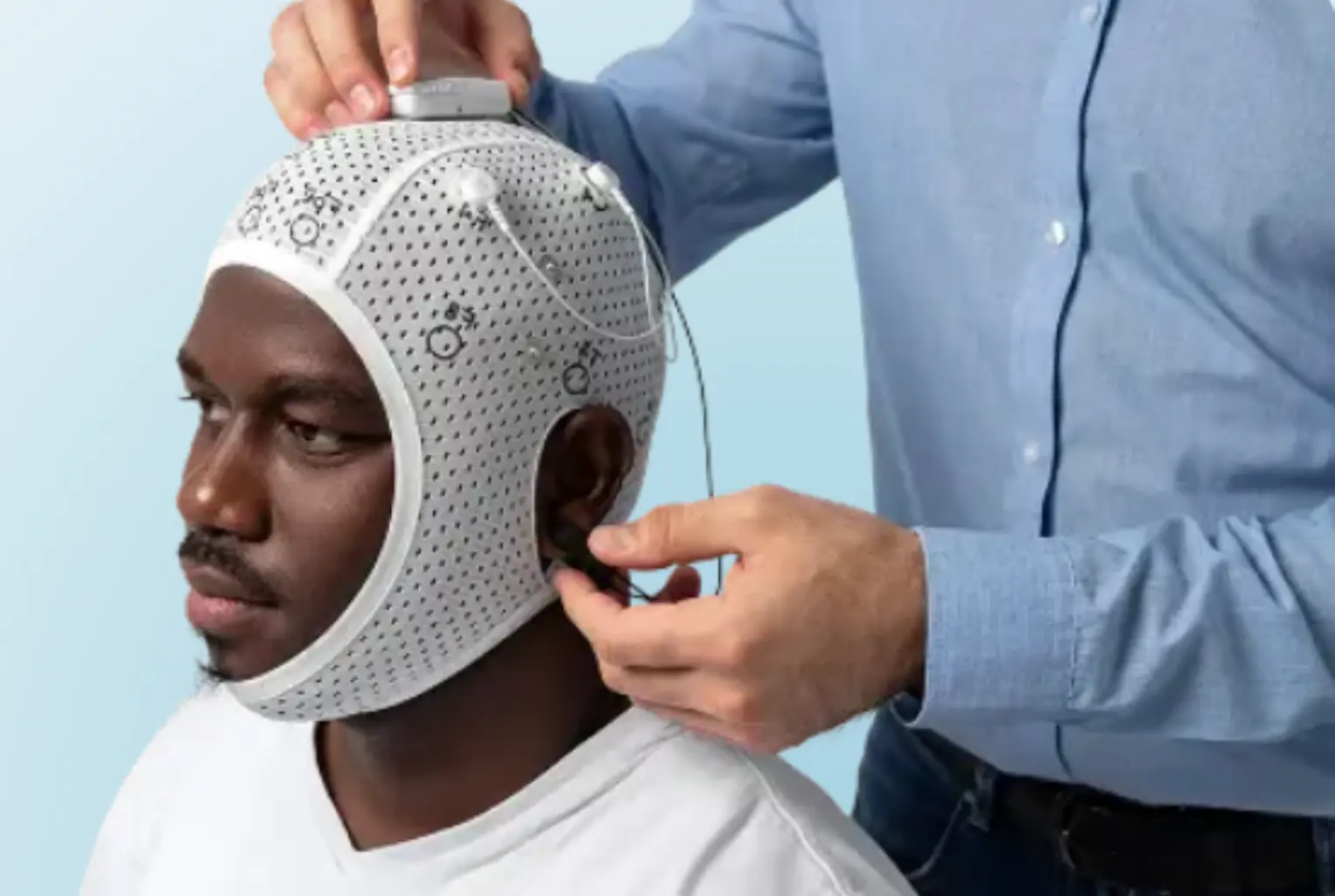
Everything you need to know about getting diagnosed with ADHD in the UK. NHS, Right to Choose, private — every pathway, every cost, every timeline, and exactly how objective brain data accelerates the entire process.
Attention Deficit Hyperactivity Disorder (ADHD) is a neurodevelopmental condition affecting approximately 5% of children and 2.5% of adults worldwide. It’s characterised by persistent patterns of inattention, hyperactivity, and impulsivity that interfere with functioning across multiple settings — home, school, work, and relationships.
ADHD is not a behavioural choice, a character flaw, or a result of bad parenting. It’s a neurological condition rooted in differences in brain structure and function — particularly in the prefrontal cortex, which governs executive function, attention regulation, and impulse control. Research consistently shows that the ADHD brain produces a different pattern of electrical activity: elevated slow-wave theta relative to fast-wave beta, a signature measurable through quantitative EEG (qEEG).
Diagnosis matters because it unlocks treatment. Untreated ADHD is associated with significantly higher rates of academic underachievement, job loss, relationship breakdown, substance misuse, accidents, and mental health comorbidities including anxiety, depression, and eating disorders. Treated ADHD — with the right combination of medication, coaching, and environmental adjustments — has one of the highest response rates of any psychiatric condition. The Royal College of Psychiatrists and Mind both provide comprehensive information on ADHD recognition and treatment.
ADHD presents in three clinically recognised forms under DSM-5 criteria. Predominantly inattentive (formerly called ADD): difficulty sustaining attention, poor organisation, forgetfulness, losing things, easily distracted. This is the type most commonly missed in women and girls because it doesn’t involve visible hyperactivity. Predominantly hyperactive-impulsive: fidgeting, difficulty staying seated, talking excessively, interrupting, acting without thinking. This is the stereotypical “bouncing off walls” presentation most people picture. Combined type: meets criteria for both inattentive and hyperactive-impulsive. This is the most commonly diagnosed presentation overall.
All three presentations show the same underlying neurology: cortical hypoarousal measurable as an elevated theta/beta ratio on EEG. Our qEEG brain screening measures this directly, regardless of which presentation type you have.
There are three routes to formal ADHD diagnosis in the UK. Each has different costs, timelines, and requirements. Understanding all three helps you choose the pathway — or combination of pathways — that works best for your situation.
Your GP refers you to your local NHS ADHD service: CAMHS (Child and Adolescent Mental Health Services) for under-18s, or the adult community mental health team for adults. The referral goes onto a waiting list. Current average wait: 2–5 years, depending on your NHS trust. Some trusts have temporarily closed their lists to new referrals.
During the wait, you receive no interim support — no medication, no formal accommodations, no coaching. The assessment itself is clinically thorough: a structured clinical interview lasting 60–90 minutes, questionnaire review, and developmental history. If ADHD is confirmed, the NHS provides ongoing care including medication management at no cost. Read our full NHS waiting list guide for strategies while you wait.
The NHS pathway has one significant limitation: it relies entirely on subjective assessment. Questionnaires, rating scales, and clinical interview. There is no brain measurement. No objective neurological data. For people who mask well — particularly women, high-functioning adults, and gifted children — this means the assessment may miss what a brain scan would catch.
Right to Choose is a legal right under the NHS Constitution allowing you to choose which qualified provider assesses you. For ADHD, this typically means being referred to Psychiatry-UK — which has a formal partnership with NHS England — at NHS expense. Wait time: 3–6 months instead of 2–5 years.
Your GP submits the referral through the NHS e-Referral Service. The assessment is conducted via video call and is clinically identical to an NHS face-to-face assessment. If ADHD is confirmed, Psychiatry-UK initiates medication and sets up a shared care agreement with your GP for ongoing prescribing. The entire process — referral, assessment, diagnosis, medication — is free to you.
The challenge: your GP needs a reason to refer. Some GPs are unfamiliar with Right to Choose or hesitant to refer without strong evidence. This is where our comprehensive screening (£845) comes in — the clinical letter provides objective neurological evidence that gives your GP the confidence to submit the referral. See our GP evidence guide for exactly what to say at the appointment.
A private psychiatric assessment costs £700–£1,500 and is typically available within 2–8 weeks. You book directly with a private psychiatrist or ADHD clinic. The assessment is 60–90 minutes, either in person or via video. If diagnosed, the psychiatrist can prescribe medication immediately and write to your GP recommending shared care.
Private assessment has the shortest wait but the highest cost. It also shares the same limitation as the NHS pathway: it’s based entirely on conversation. No brain measurement is included. Bringing our brain screening data to a private assessment gives the psychiatrist objective neurological evidence they wouldn’t otherwise have — making the assessment more efficient and the diagnosis more evidence-based.
| Pathway | Cost | Wait time | Assessment | Medication |
|---|---|---|---|---|
| NHS standard | Free | 2–5 years | 60–90 min, in person | NHS-funded ongoing |
| Right to Choose | Free | 3–6 months | 60–90 min, video call | NHS-funded via shared care |
| Fully private | £700–£1,500 | 2–8 weeks | 60–90 min, in person or video | Private then shared care |
| Brain screening + RtC | £595–£845 | 3–6 months | Objective data + clinical interview | NHS-funded via shared care |
ADHD diagnosis in the UK follows the NICE guidelines (NG87) using the DSM-5 (Diagnostic and Statistical Manual, 5th edition) or ICD-11 (International Classification of Diseases, 11th revision) criteria. Both require the same core elements: a persistent pattern of inattention and/or hyperactivity-impulsivity that interferes with functioning, is present across multiple settings, and cannot be better explained by another condition.
Symptom threshold: at least 6 out of 9 inattention symptoms AND/OR at least 6 out of 9 hyperactivity-impulsivity symptoms for children. For adults (age 17+), the threshold is 5 out of 9 in either category. Duration: symptoms must have been present for at least 6 months. Age of onset: several symptoms must have been present before age 12 (though they may not have been recognised at the time). Pervasiveness: symptoms must be present in two or more settings (home, school/work, social situations). Functional impairment: symptoms must interfere with or reduce the quality of social, academic, or occupational functioning. Not better explained by: anxiety, depression, autism, sleep disorders, intellectual disability, substance use, or another mental health condition.
This last criterion — differential diagnosis — is where objective brain data is particularly valuable. Anxiety, depression, and sleep disorders all produce symptoms that overlap with ADHD. Questionnaires cannot distinguish between them because they measure reported behaviour, not underlying neurology. Our qEEG screening measures the theta/beta ratio pattern specific to ADHD — a pattern that doesn’t appear in the same way in anxiety, depression, or sleep disorders. This helps the assessing clinician make a more accurate differential diagnosis.
Before or during assessment, you’ll typically complete standardised questionnaires. For adults, the most common are the ASRS (Adult ADHD Self-Report Scale) and the DIVA (Diagnostic Interview for ADHD in Adults). For children, the Conners rating scales and SDQ (Strengths and Difficulties Questionnaire) are standard. For teenagers, a combination of self-report and parent/teacher informant scales is used.
These questionnaires are valuable but inherently subjective. They measure how you (or an observer) perceive your behaviour — not what your brain is actually doing. For people who mask their symptoms — particularly women with inattentive ADHD who’ve spent decades compensating — the questionnaire scores can look normal even when the underlying neurology is clearly not. That’s why combining questionnaire data with objective brain data produces the most accurate diagnostic picture.
Whether NHS, Right to Choose, or private, the psychiatric assessment follows the same clinical structure. A qualified psychiatrist or specialist clinician conducts a comprehensive evaluation lasting 60–90 minutes. Here’s what to expect at each stage.
You’ll be asked to complete pre-assessment questionnaires (ASRS, DIVA, or Conners) and provide supporting documentation: old school reports, a developmental history, and ideally an informant report from someone who knows you well (partner, parent, close friend). If you have our clinical letter and brain screening report, attach these to your pre-assessment paperwork. Most assessors review this evidence before the appointment, so arriving with strong documentation means a more focused, efficient session.
The clinician will explore your current symptoms across home, work, and social settings — what specific difficulties you experience, how often, and how severely they impact your functioning. They’ll investigate your childhood history, looking for evidence that symptoms were present before age 12 (even if they weren’t recognised at the time — school reports describing you as “easily distracted” or “not reaching potential” count). They’ll assess functional impairment — the concrete impact on your education, career, relationships, finances, and daily organisation. And they’ll screen for coexisting conditions: anxiety, depression, autism, sleep disorders, trauma, and substance use.
If you’ve brought brain screening data, expect the clinician to review the theta/beta ratio findings and integrate them into their clinical picture. Many assessors have told us this is the point where the appointment becomes significantly more productive — they can focus on confirming what the brain data suggests rather than spending time establishing whether ADHD is even plausible.
Based on all available evidence — clinical interview, questionnaires, developmental history, informant reports, and any brain data — the clinician makes a diagnostic determination. They’ll identify which presentation type (inattentive, hyperactive-impulsive, or combined) and the severity (mild, moderate, or severe). If ADHD is confirmed, they discuss treatment options. If it’s not confirmed, they’ll typically suggest alternative explanations and may refer for further investigation.
First-line treatment for ADHD is typically stimulant medication: methylphenidate (brand names Concerta, Equasym, Medikinet) or lisdexamfetamine (Elvanse). These work by increasing cortical arousal — essentially boosting the beta activity that ADHD brains underproduce. The clinician starts at a low dose and titrates upward over several weeks, monitoring for therapeutic effect and side effects.
Non-stimulant options include atomoxetine (Strattera) and guanfacine. Non-medication approaches include ADHD coaching, CBT adapted for ADHD, environmental modifications, and assistive technology. Most effective treatment combines medication with at least one non-medication intervention.
If you had our brain screening before starting medication, your baseline theta/beta ratio data becomes invaluable. A follow-up medication comparison scan (£345) shows objective before-and-after changes — evidence that treatment is having the intended neurological effect, not just “you feel better.” See how our screening works for the full process.

Adult ADHD diagnosis has surged in recent years as awareness has grown, but the system hasn’t kept pace. NHS adult ADHD services are overwhelmed, with some trusts reporting 5+ year waits. Many adults discover they have ADHD in their 30s, 40s, or 50s — often triggered by a child’s diagnosis that prompts a “wait, that sounds like me” moment.
The diagnostic criteria are the same for adults as for children, with two modifications: the symptom threshold is 5 out of 9 (not 6), and the clinician must establish that symptoms were present in childhood (before age 12), even if they weren’t identified at the time. This is where old school reports, childhood memories, and informant accounts from parents become critical evidence.
Adults develop sophisticated coping strategies that mask ADHD symptoms. The woman who sets 15 phone alarms to get through each day. The man who works twice as hard as colleagues to produce the same output. The person who avoids any task requiring sustained organisation by delegating, outsourcing, or simply never starting. From the outside, these people look functional. Inside, they’re exhausting themselves just to keep up.
Questionnaires are particularly unreliable for adults who mask. When asked “do you have difficulty organising tasks?”, the adult who has spent 20 years building elaborate workarounds may honestly answer “no” — because the system works, even though it’s unsustainably effortful. Our brain screening bypasses this entirely. The theta/beta ratio measures cortical arousal directly — it doesn’t care how well you’ve learned to compensate.
Adults diagnosed later in life consistently describe the same emotions: grief for the years lost to undiagnosed struggle, anger at the system that missed them, and profound relief that there’s finally an explanation. Many have been misdiagnosed with anxiety, depression, or personality disorders. Many have been prescribed SSRIs that helped partially but never resolved the core issue. Many have internalised the belief that they’re lazy, stupid, or broken.
Diagnosis changes this narrative entirely. It reframes a lifetime of “why can’t I just be normal?” into “my brain works differently, and now I know how to support it.” Combined with medication and coaching, most adults report significant improvements within weeks of starting treatment.
Adults from across the UK use our screening to fast-track this process: standard screening (£595) for the data, or comprehensive (£845) with a clinical letter to take to your GP or private psychiatrist.
ADHD is typically first identified in children aged 6–12, often triggered by school difficulties. Teachers notice the child can’t sustain attention, is disruptive, or is significantly underperforming relative to their ability. The school may suggest assessment. The parent visits the GP. The GP refers to CAMHS. And then the wait begins.
For children, the diagnostic assessment involves the child directly, plus parent and teacher informant reports. The clinician observes the child, conducts age-appropriate interview, reviews questionnaires (typically Conners scales), and examines school reports and educational psychology assessments if available. Diagnosis requires evidence of symptoms across at least two settings (usually home and school).
Every year a child waits for diagnosis is a year of unsupported struggle at school. A child diagnosed at 7 and supported immediately has a fundamentally different academic and social trajectory from a child diagnosed at 14 after years of falling behind, developing anxiety, and internalising the belief that they’re “just not smart enough.”
ADHD is one of the most common reasons for EHCP applications and JCQ exam access arrangements. But without a diagnosis — or at least strong objective evidence — schools struggle to justify the support. Our brain screening provides the neurological evidence that schools, SENCOs, and EHCP panels need, even before formal diagnosis is complete.
Teenagers present a particular urgency. GCSEs and A-levels don’t wait for NHS waiting lists. A teenager who needs exam access arrangements (extra time, rest breaks, separate room) needs evidence now — not in 3 years when the exams are already passed or failed. Our screening provides same-day evidence that schools can use for JCQ applications while the formal diagnostic pathway continues in parallel.
The family package (£1,095) is designed for families screening multiple members — typically siblings, or a parent and child who both suspect ADHD. ADHD has a strong genetic component: if one family member has it, the probability of another family member having it is significantly elevated.
ADHD was historically studied almost exclusively in hyperactive boys. The diagnostic criteria, the questionnaires, and the clinical training all evolved around a profile of external, visible, disruptive behaviour. Women and girls with ADHD — who more commonly present with the inattentive type — were systematically overlooked for decades.
The inattentive presentation looks nothing like the stereotype. It’s internal: difficulty organising thoughts, chronic overwhelm, emotional dysregulation, sensory sensitivity, rejection sensitivity, time blindness, and a constant sense of “treading water.” From the outside, these women often appear high-functioning — they’ve learned to mask through sheer effort, people-pleasing, and anxiety-driven overcompensation. But the internal cost is enormous.
Women are far more likely than men to receive a misdiagnosis of anxiety, depression, borderline personality disorder, or “burnout” before ADHD is considered. Many spend years on SSRIs that partially help (because anxiety is often a secondary symptom of undiagnosed ADHD) but never resolve the core issue. Hormonal transitions — puberty, pregnancy, perimenopause — often trigger or unmask ADHD symptoms because oestrogen supports dopamine function.
Our brain screening is particularly valuable for women because it bypasses the behavioural bias entirely. The theta/beta ratio measures cortical arousal directly. It doesn’t care how well you mask. It doesn’t depend on a teacher noticing you were hyperactive at age 7 (because you probably weren’t — you were the quiet daydreamer at the back). It simply measures what your brain is doing, right now, compared against published norms from peer-reviewed sources including Monastra et al. (1999). That objectivity is what many women tell us was the turning point in their diagnostic journey.
A GP who sees objective brain data with z-scores and peer-reviewed citations is significantly more likely to refer than one hearing self-reported symptoms alone. Our GP evidence guide shows exactly how to present the data.
Right to Choose requires a GP referral. Brain data gives your GP the clinical justification to submit it. Multiple clients have had referrals accepted after presenting our clinical letter to GPs who previously refused.
Whether NHS, RtC, or private, presenting brain data gives the assessor an objective evidence stream they wouldn’t otherwise have. Combined with clinical interview, accuracy reaches 89–94% (FDA-cleared methodology, American Academy of Neurology).
Pre-treatment brain data becomes invaluable if you’re prescribed medication. A follow-up scan (£345) shows objective before/after changes in theta/beta ratio — real evidence that treatment is working.
Formal diagnosis can take months even via Right to Choose. Meanwhile, your brain data supports EHCP applications, JCQ exam access, and SEN register placement — giving your child support before the diagnosis arrives.
Adults can use the clinical letter for Access to Work applications and employer reasonable adjustments under the Equality Act — even before formal diagnosis is complete.
Our screening isn’t a shortcut past the diagnostic process — it’s the evidence that makes every step of that process faster, more accurate, and more likely to result in the right outcome. View our screening packages or see how the screening works.
The cost depends entirely on which pathway you choose. Here’s the honest breakdown.
NHS standard pathway: £0 — completely free at point of use. The trade-off is time: 2–5 years on the waiting list with no interim support. Once diagnosed, ongoing care (medication, reviews, shared care) is NHS-funded.
Right to Choose via Psychiatry-UK: £0 — NHS-funded. Your GP submits the referral, assessment happens within 3–6 months, and if diagnosed, medication and shared care are covered. The only cost is any evidence you choose to gather beforehand (like our screening).
Fully private: £700–£1,500 for the initial psychiatric assessment. Medication titration may cost an additional £200–£500 for 3–6 follow-up sessions. Ongoing prescribing transfers to your GP via shared care agreement. Some private providers charge annually for review appointments (£200–£400).
ADHD Brain Screening £595 — qEEG scan with same-day PDF report containing theta/beta ratio, z-scores, frequency analysis, and Go/No-Go attention task results. Comprehensive Assessment £845 — everything above plus 20-minute consultation and clinical interpretation letter for your GP, school, or employer. Family Package £1,095 — two screenings with individual reports. Medication Comparison £345 — pre/post medication brain data.
A formal ADHD diagnosis is not just a label — it’s a key that unlocks specific, practical support. Here’s what becomes available.
ADHD medication has one of the highest response rates of any psychiatric treatment. Stimulants (methylphenidate, lisdexamfetamine) work for approximately 70–80% of people with ADHD. They increase cortical arousal — boosting the beta activity that ADHD brains underproduce — and the effect is typically noticeable within the first week. Most people describe it as “putting on glasses for the first time” — the world doesn’t change, but suddenly you can see it clearly.
ADHD is classified as a disability under the Equality Act 2010 when it has a substantial, long-term impact on day-to-day activities. This gives you legal protection against discrimination in employment, education, and access to services. It also entitles you to reasonable adjustments from your employer — and enables Access to Work applications for government-funded coaching, assistive technology, and workplace support.
For children and teenagers, diagnosis strengthens applications for Education, Health and Care Plans (EHCPs), SEN register placement, and JCQ exam access arrangements. Schools can access additional funding and put targeted support in place — but they need the diagnostic evidence to justify it.
Perhaps the most powerful change is psychological. Diagnosis reframes a lifetime of struggling, failing, and self-blame into understanding. You’re not lazy. You’re not stupid. You’re not broken. Your brain works differently, and now you know exactly how — and exactly what to do about it.
Read more about how to prepare for your assessment in our psychiatric assessment guide, or check our FAQ for common questions.
Three pathways: NHS standard (free, 2–5 year wait), Right to Choose (free, 3–6 months via Psychiatry-UK), or fully private (£700–£1,500, 2–8 weeks). All require a GP referral except some private self-referral options. Our GP evidence guide helps with the referral conversation.
The assessment itself takes 60–90 minutes. The wait to get the assessment: NHS 2–5 years, Right to Choose 3–6 months, private 2–8 weeks. Our brain screening gives you evidence to use whichever pathway you choose, and provides support for school and work while you wait.
Yes. Adult ADHD diagnosis follows the same criteria. Symptoms must have been present before age 12, but many adults are diagnosed in their 30s, 40s, or later. The symptom threshold is 5/9 for adults vs 6/9 for children.
Our qEEG screening measures the theta/beta ratio — the most-studied EEG biomarker for ADHD. It provides objective evidence to support diagnosis but doesn’t diagnose on its own. Combined with clinical assessment, accuracy reaches 89–94%. Learn more on our science page.
Yes — both the NHS standard pathway and Right to Choose are free. The trade-off is waiting time. Our screening (£595–£845) provides evidence to accelerate the process and support you while you wait.
If the clinician doesn’t diagnose ADHD, they’ll typically suggest alternative explanations (anxiety, depression, sleep disorder, autism) and may refer for further investigation. A normal theta/beta ratio in the context of attention difficulties is itself useful information — it suggests looking elsewhere.
We recommend it. The comprehensive package (£845) provides a clinical letter that strengthens your GP referral and gives the assessor objective data they wouldn’t otherwise have. It also provides evidence for school and work support while you wait.
First-line: stimulants — methylphenidate (Concerta, Equasym) or lisdexamfetamine (Elvanse). Second-line: atomoxetine (Strattera), guanfacine. Stimulants work for ~70–80% of people. Our medication comparison scan (£345) shows objective before/after brain data.
With private assessment, yes — some psychiatrists prescribe on the same day as diagnosis. Via Right to Choose, medication is typically initiated within 2–4 weeks of the assessment. Via NHS, it depends on your local service.
Start with our brain screening for same-day objective evidence. Take the results to your GP for referral. Simultaneously, give the clinical letter to your child’s SENCO for EHCP and exam access support. See our children’s guide.
We conduct screenings at private venues across Cheshire and the wider region, plus home visits nationwide. Same-week appointments typically available. Book online or call +44 161 570 1638. See how it works.
Standard £595, Comprehensive £845, Family £1,095, Medication Scan £345. View full pricing details. The comprehensive package is what most clients pursuing diagnosis choose — it includes the clinical letter.
Same-day report. Clinical letter for your GP. Evidence that accelerates every pathway to diagnosis.