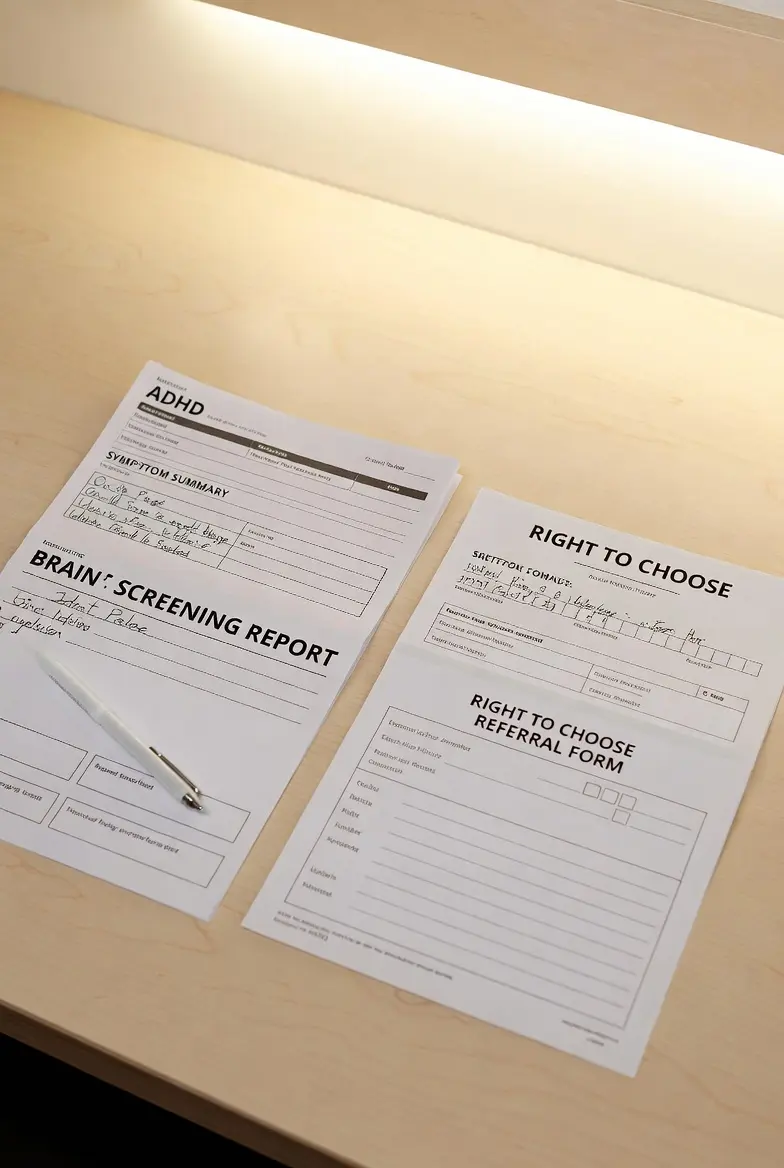
The average NHS wait for an ADHD assessment is 2–5 years. Your child’s exams, your career, your mental health — none of them can wait that long. Here’s what you can do right now.
Let’s be honest about what you’re facing. The NHS ADHD assessment pathway is in crisis. Not because clinicians don’t care, but because demand has massively outstripped capacity. Here’s the current situation:
Average waiting time from GP referral to first CAMHS assessment: 2–3 years in most NHS trusts. Some areas (including parts of the North West) report waits of 4–5 years. The NICE guidelines (NG87) recommend timely assessment — but the system can’t deliver it. That means a child referred at age 7 may not be assessed until they’re 10–12 — missing the entire primary school window for support. For teenagers, the wait often extends past their GCSEs.
Adult ADHD assessment is even more backlogged. Many NHS trusts have 3–5 year waits for adult assessment. Some trusts have temporarily closed their adult ADHD referral lists entirely. For adults who’ve been struggling for decades, being told to wait another 5 years is devastating.
Nothing. That’s the problem. While you sit on the waiting list, there is no interim support, no provisional medication, no school accommodations, and no workplace adjustments. Your child continues to fall behind. Your career continues to suffer. Your mental health continues to deteriorate. The waiting list isn’t just an inconvenience — it’s actively harmful.
Right to Choose is a legal right under the NHS Constitution that allows you to be assessed by a qualified private provider at NHS expense. Your GP submits the referral to a provider like Psychiatry-UK or Clinical Partners. Waiting times are typically 3–6 months rather than years.
The catch: your GP needs to agree to refer. Some GPs are unfamiliar with Right to Choose or reluctant to use it without strong evidence. This is where objective brain data makes a difference — a professional screening report with z-scores and peer-reviewed citations gives your GP the evidence to justify the referral confidently. Read our full guide on presenting ADHD evidence to your GP.
You can bypass the NHS entirely and pay for a private assessment with a psychiatrist. This typically involves a 60–90 minute clinical interview, behavioural rating scales, and developmental history review. Waiting times are usually 2–8 weeks.
The limitation: private assessments are expensive and are entirely based on conversation. There is no brain measurement. A qEEG screening beforehand can provide your psychiatrist with objective neurological data they wouldn’t otherwise have — making their assessment more informed and potentially more efficient.
This is what we provide. A 30-minute brain screening that measures the theta/beta ratio — the FDA-referenced biomarker for ADHD — and compares your results against published normative data from 311+ research subjects. You receive a same-day professional PDF report.
This is not a diagnosis. But it’s the one thing neither the NHS nor a private psychiatrist currently offers: actual brain data. It serves three purposes:
Even if you stay on the NHS list, you don’t have to wait passively. Use the waiting time to build a comprehensive evidence file:
When your NHS appointment finally arrives, you’ll have a comprehensive file that makes the assessment process faster and more conclusive.

Important: We never suggest leaving the NHS waiting list. Stay on it. But don’t wait passively. A brain screening gives you actionable data while you wait — data that can open doors to support that would otherwise remain closed until your NHS appointment arrives in 2–5 years.
Objective brain data with z-scores and peer-reviewed citations gives your GP the evidence to write a stronger referral, request urgent assessment, or submit a Right to Choose application. Read our full GP evidence guide.
SENCOs can use our reports to support EHCP applications, SEN register placements, classroom adjustments, and JCQ exam access arrangements — all without waiting for a formal diagnosis.
Adults can use our clinical letter for Access to Work applications, reasonable adjustment requests, and occupational health assessments while awaiting formal diagnosis.
If you opt for a private assessment, presenting brain data upfront gives the psychiatrist an additional objective data point. It can make the assessment more focused and potentially faster.
When your NHS appointment eventually arrives, you’ll walk in with a comprehensive evidence file including neurological data. The assessment becomes faster and more conclusive because the groundwork is already done.
As of 2024, average waits are 2–3 years for children via CAMHS and 3–5 years for adults. Some NHS trusts have waits exceeding 5 years. Over 177,000 people were on waiting lists in England. The situation varies by region but is consistently long nationwide.
Not directly — we can’t change the NHS queue. But the report gives your GP objective evidence to request urgent assessment, reclassify priority, or support a Right to Choose application that bypasses the standard wait. Many clients report their referrals being fast-tracked after presenting our reports.
Right to Choose is a legal right allowing you to be assessed by a qualified private provider at NHS expense. Your GP submits the referral. Providers like Psychiatry-UK typically assess within 3–6 months. Our clinical letter provides the evidence your GP needs to initiate this.
Yes. We always recommend staying on the list while pursuing other options. The NHS pathway leads to fully-funded ongoing care including medication and follow-up. A brain screening gives you evidence and support in the meantime — it doesn’t replace the NHS process.
No. Our screening provides objective neurological data — not a diagnosis. ADHD diagnosis requires comprehensive clinical assessment. Our report is designed as supporting evidence to present to clinicians, schools, and employers. Full details in our disclaimer.
Yes — this is one of our most common scenarios. A comprehensive screening with clinical letter can provide evidence for JCQ exam access arrangements (extra time, rest breaks). The school’s SENCO can apply for these using our report without waiting for a formal NHS diagnosis. Read our EHCP and exam evidence guide.
Adult waiting times are often worse — 3–5 years in many trusts. Some have closed referral lists. Adult ADHD screening is particularly valuable because Right to Choose and Access to Work provide routes to support that don’t depend on NHS diagnosis.
Our standard screening is £595, comprehensive (with clinical letter) is £845. A full private psychiatric assessment is typically £700–£1,500. The key difference: we provide brain data, they provide diagnosis. Many clients do both — screening first for evidence, then private assessment for diagnosis. See our pricing page.
Yes — our Family Package (£1,095) covers two children or teenagers in one visit with individual reports. For three or more, contact us for a custom quote.
Macclesfield, Cheshire — accessible from Manchester (30 min), Stockport (20 min), Wilmslow (10 min), Warrington (35 min), Chester (45 min), and the wider North West. Free parking. Same-week appointments usually available. Get in touch.
Get objective brain data this week. Same-day report. Evidence that opens doors while you wait.