ADHD in Women & Girls — Why It’s Missed, How It Feels, and What You Can Do About It
If you are a woman reading this, there is a good chance you have spent years — possibly decades — wondering why everything feels harder for you than it seems to for everyone else. The constant mental effort to stay organised. The exhaustion of appearing “fine” while your brain races. The shame of forgetting things, losing things, and struggling with tasks that others seem to manage effortlessly.
You may have been told you have anxiety. Or depression. Or both. You may have tried therapy that helped a bit but never quite fixed the underlying problem. And now, perhaps after a child’s diagnosis, or a TikTok video, or a conversation with a friend, you are wondering: is this ADHD?
If your screening results showed elevated brain activity, this page will help you understand why your ADHD may have been invisible for so long — and what to do about it.
In this guide
- Why ADHD in women is missed
- How ADHD presents differently in women
- Masking — the exhausting art of appearing normal
- The hormonal connection
- ADHD and motherhood
- Misdiagnosis — anxiety, depression or ADHD?
- Late diagnosis — processing the revelation
- Why qEEG screening is especially valuable for women
- Treatment considerations for women
- Getting diagnosed as a woman
- Frequently asked questions
Why ADHD in women is missed
Research confirms ADHD is not a male condition. It affects women at nearly the same rate as men. But the diagnostic system was built on boys, and it has been failing women ever since.
In childhood, boys are diagnosed with ADHD at a 2:1 ratio compared to girls. By adulthood, that gap narrows to 1.6:1 — not because more women develop ADHD as adults, but because women who were missed as children are finally being identified. A 2026 Monash University study — the first to examine ADHD across the female lifespan — concluded that the gender gap likely reflects systemic misdiagnosis and underdiagnosis of females, rather than a genuine male predominance.
The consequences are measurable. Women with ADHD have higher rates of anxiety, depression, eating disorders and self-harm than men with ADHD — not because female ADHD is inherently more severe, but because it goes unrecognised and untreated for longer. The average age of diagnosis for women is 36–38, compared to 7–8 for boys. That is three decades of compensating without support.
The reasons are structural:
- Diagnostic criteria were based on boys. The original ADHD research focused on hyperactive, disruptive boys. NICE guideline NG87 now recognises that ADHD presents differently across genders, but diagnostic practice has been slow to catch up. The diagnostic tools were validated on male populations. The “classic ADHD” image — the boy who cannot sit still — became the template, and everything that did not match it was overlooked
- Girls are socialised to comply. From an early age, girls learn to be quiet, organised and cooperative. A girl with ADHD who daydreams in class is “dreamy” or “not trying.” A boy who disrupts class is referred for assessment. The girl’s ADHD is invisible because her coping mechanisms are invisible
- Women internalise. While boys tend to externalise ADHD symptoms (hyperactivity, defiance, impulsivity), women more often internalise them (anxiety, self-criticism, emotional overwhelm). The visible symptoms get assessed. The invisible ones get prescribed antidepressants
How ADHD presents differently in women
Women with ADHD are more likely to present with the predominantly inattentive type rather than the hyperactive-impulsive type. This means the symptoms are quieter, more internal, and easier to explain away.
Inattention (the core feature)
- Chronic difficulty sustaining focus, especially on tasks that are boring or routine
- Losing track of conversations, appointments, belongings — constantly
- Starting many projects but finishing few
- Difficulty following multi-step instructions without writing them down
- Mind wandering during meetings, reading, or when someone is talking to you
Emotional dysregulation
- Intense emotional reactions that feel disproportionate to the situation
- Rejection Sensitive Dysphoria — overwhelmingly painful reactions to perceived criticism. Research shows RSD is reported more frequently by women than men with ADHD
- Mood that shifts rapidly — fine one hour, in tears the next, often without clear cause
- Chronic feelings of shame, inadequacy and “not being enough”
Internal restlessness
- Racing thoughts rather than physical hyperactivity
- Inability to “switch off” at night — the brain keeps running
- Fidgeting that is subtle: picking at skin, clicking pens, jiggling a foot under the desk
- Feeling constantly “on the go” mentally, even when physically still
ADHD at work — the hidden struggle
- Difficulty following long meetings without losing focus — then panicking because you missed key actions
- Procrastinating on complex tasks until the deadline forces action — then delivering excellent work under pressure, which convinces everyone you are fine
- Over-committing because you cannot gauge how long tasks take, then working evenings and weekends to compensate
- Difficulty with open-plan offices — every conversation, notification and movement pulls your attention. Many women with ADHD describe the workplace as an assault on concentration
- Career underperformance relative to ability — the gap between your intellectual capacity and your output is frustrating and demoralising. You know you are capable of more, but your brain will not cooperate consistently
The Equality Act 2010 protects people with ADHD from workplace discrimination and entitles you to reasonable adjustments. Our workplace rights guide covers what you can request and how. Access to Work grants can fund ADHD coaching, noise-cancelling equipment and other support worth up to £16,000 per year.
The burnout pattern
- Periods of intense productivity followed by complete collapse
- Working twice as hard as colleagues to produce the same output
- Chronic exhaustion that sleep does not fix — because the exhaustion is from the effort of masking, not from physical activity
Masking — the exhausting art of appearing normal
Masking is the process of consciously or unconsciously hiding ADHD symptoms to meet social expectations. Women with ADHD are exceptionally good at it — and it is destroying them.
Masking looks like:
- Spending hours perfecting homework or work that others complete quickly
- Creating elaborate organisational systems to compensate for executive function deficits — then being praised for being “so organised”
- Rehearsing conversations in advance to avoid saying the wrong thing
- Arriving exactly on time because you left 45 minutes early “just in case”
- Smiling and nodding during meetings while your mind has drifted somewhere else entirely
- Maintaining a calm exterior while internally drowning in overwhelm
The cost of masking is immense. It consumes cognitive resources that should be available for actual living. It creates a gap between who you appear to be and who you feel you are, breeding impostor syndrome. And it convinces the people around you — including doctors — that you are fine.
Masking also creates a paradox in the diagnostic process. The better you are at masking, the less likely you are to be diagnosed — which means the women who need support most are the least likely to receive it. A GP who sees a well-presented woman holding down a job will often struggle to reconcile that image with an ADHD referral. But the effort behind that presentation is invisible, and it is that invisible effort that constitutes the disability.
Many women describe a double life: the competent, organised person everyone sees, and the chaotic, overwhelmed person who exists at home when the mask comes off. Partners, children and close friends see the reality. Colleagues, doctors and acquaintances see the performance. When the performance is good enough, nobody questions what it costs.

The hormonal connection
One of the most significant and least understood aspects of female ADHD is the relationship between sex hormones and dopamine. Oestrogen directly influences dopamine synthesis and receptor sensitivity in the prefrontal cortex. When oestrogen is high, dopamine function improves. When oestrogen drops, ADHD symptoms worsen.
This creates predictable symptom fluctuations across the female lifespan:
Menstrual cycle
The Monash lifespan study found that 88% of women with ADHD reported symptom changes tied to their menstrual cycle. Symptoms are typically worst in the luteal phase (days 15–28, the two weeks before your period) when oestrogen and progesterone drop. A 2025 Frontiers in Global Women’s Health paper found that low oestrogen levels may specifically worsen inattention peri-menstrually and hyperactivity-impulsivity post-ovulation.
Pregnancy and postpartum
During pregnancy, elevated oestrogen may temporarily improve ADHD symptoms. After birth, oestrogen plummets — and over 70% of women in the Monash study reported their ADHD symptoms worsening postpartum. This is often misattributed to “baby brain” or postnatal depression rather than recognised as ADHD exacerbation.
Perimenopause and menopause
This is where the evidence is most striking. The Monash study found 97% of women reported ADHD symptom worsening during menopause, as oestrogen declines permanently. Many women describe this as the point where lifelong coping strategies simply stop working. For some, this is when they are first diagnosed — in their 40s or 50s — after decades of unrecognised ADHD.
The symptoms of perimenopause (brain fog, difficulty concentrating, mood swings, memory problems) overlap significantly with ADHD, which means many women receive HRT for “menopause symptoms” when the underlying issue is ADHD that has been unmasked by hormonal decline.
ADHD and motherhood
Motherhood places extraordinary demands on executive function — precisely the cognitive domain most impaired in ADHD. Scheduling, meal planning, remembering appointments, managing multiple children’s needs simultaneously, maintaining a household, and carrying the mental load of family life all require sustained organisational capacity that the ADHD brain struggles to provide.
For many women, having children is the catalyst for diagnosis. The demands escalate beyond what their coping strategies can manage, and the gap between what they are expected to handle and what their brain can deliver becomes impossible to ignore.
The specific challenges
- The mental load is crushing. Tracking school events, medical appointments, dietary needs, clothing sizes, friendship dynamics, homework deadlines, and household supplies simultaneously is an executive function marathon. Neurotypical mothers find it demanding; mothers with ADHD find it paralysing
- Routine is both essential and impossible. Children thrive on routine, but the ADHD brain rebels against it. Maintaining consistent bedtimes, mealtimes and morning routines requires the exact kind of monotonous, repetitive executive function that ADHD undermines
- Comparison with other mothers is devastating. Social media amplifies the gap between the organised, calm mother you feel you should be and the overwhelmed, forgetful mother you are. The shame of sending children to school without the right equipment, missing non-uniform day, or forgetting to reply to party invitations feeds a cycle of inadequacy
- Postpartum hormone crash. The Monash study found over 70% of women reported ADHD worsening postpartum. Combine this with sleep deprivation, identity adjustment and the sudden 24/7 demands of a newborn, and the first months of motherhood can trigger a complete executive function collapse
- Your child’s diagnosis reveals your own. Many women discover their ADHD after a child is diagnosed. Sitting in the assessment room, hearing the clinician describe your child’s symptoms, and recognising every single one in yourself is an extraordinarily common pathway to adult female diagnosis
Misdiagnosis — anxiety, depression or ADHD?
Women with ADHD are frequently diagnosed with anxiety, depression or both before ADHD — a pattern recognised by the NHS is identified — often by years or decades. This is not surprising: living with unrecognised ADHD is genuinely anxiety-inducing and depressing. The constant effort, the repeated failures despite trying hard, the gap between your potential and your output — these create legitimate emotional distress.
But there is a crucial difference between primary anxiety/depression and ADHD-driven anxiety/depression:
- Primary anxiety improves with standard anxiety treatment (SSRIs, CBT). ADHD-driven anxiety improves partially but the underlying concentration and organisation difficulties remain
- Primary depression typically has clear episodes and periods of remission. ADHD-driven low mood is chronic and closely tied to executive function failures — the shame of forgetting, the frustration of underperformance
- The pattern test: If you have been treated for anxiety or depression and the treatment helped “some but not enough” — if the emotional symptoms improved but the focus, organisation and memory problems remained — the underlying issue may be ADHD
Late diagnosis — processing the revelation
Most women with ADHD are diagnosed in their 30s, 40s or 50s — decades after the condition began affecting their lives. The emotional response to late diagnosis is complex and deserves acknowledgement.
Grief for the years lost
Many women experience genuine grief when diagnosed. The career that might have been different. The relationships that might have survived. The education that might have gone further. The decades of believing you were lazy, stupid, or not trying hard enough when the reality was a neurological condition that nobody identified. This grief is valid, and it is not self-pity — it is the appropriate response to a system that failed you.
Relief and validation
Alongside the grief, most women describe overwhelming relief. A name for the experience. An explanation for why everything was harder. Evidence that you were never lazy — you were working twice as hard with half the neurochemical support. Many women describe diagnosis as the moment they finally understood themselves.
Anger at the system
It is entirely reasonable to feel angry at a diagnostic system that overlooked you for decades. At the GP who diagnosed anxiety. At the teacher who wrote “could try harder.” At a society that told you the problem was effort when the problem was neurology. This anger can be channelled productively — many late-diagnosed women become powerful advocates for better recognition of ADHD in women and girls.
Rebuilding your self-concept
Diagnosis requires rewriting your personal narrative. Every memory needs to be re-examined through the lens of ADHD. The lost keys were not carelessness. The missed deadlines were not laziness. The emotional outbursts were not weakness. This reframing takes time — often months or years — and many women benefit from working with a therapist who understands ADHD during this process.
Support groups, both online and in-person, can be transformative during this period. Hearing other women describe identical experiences validates your own and accelerates the process of self-understanding. ADHD UK and local support networks offer women-specific groups that provide a safe space to process the complex emotions that accompany late diagnosis. You are not alone in this, and the community of late-diagnosed women is growing rapidly.
Why qEEG screening is especially valuable for women
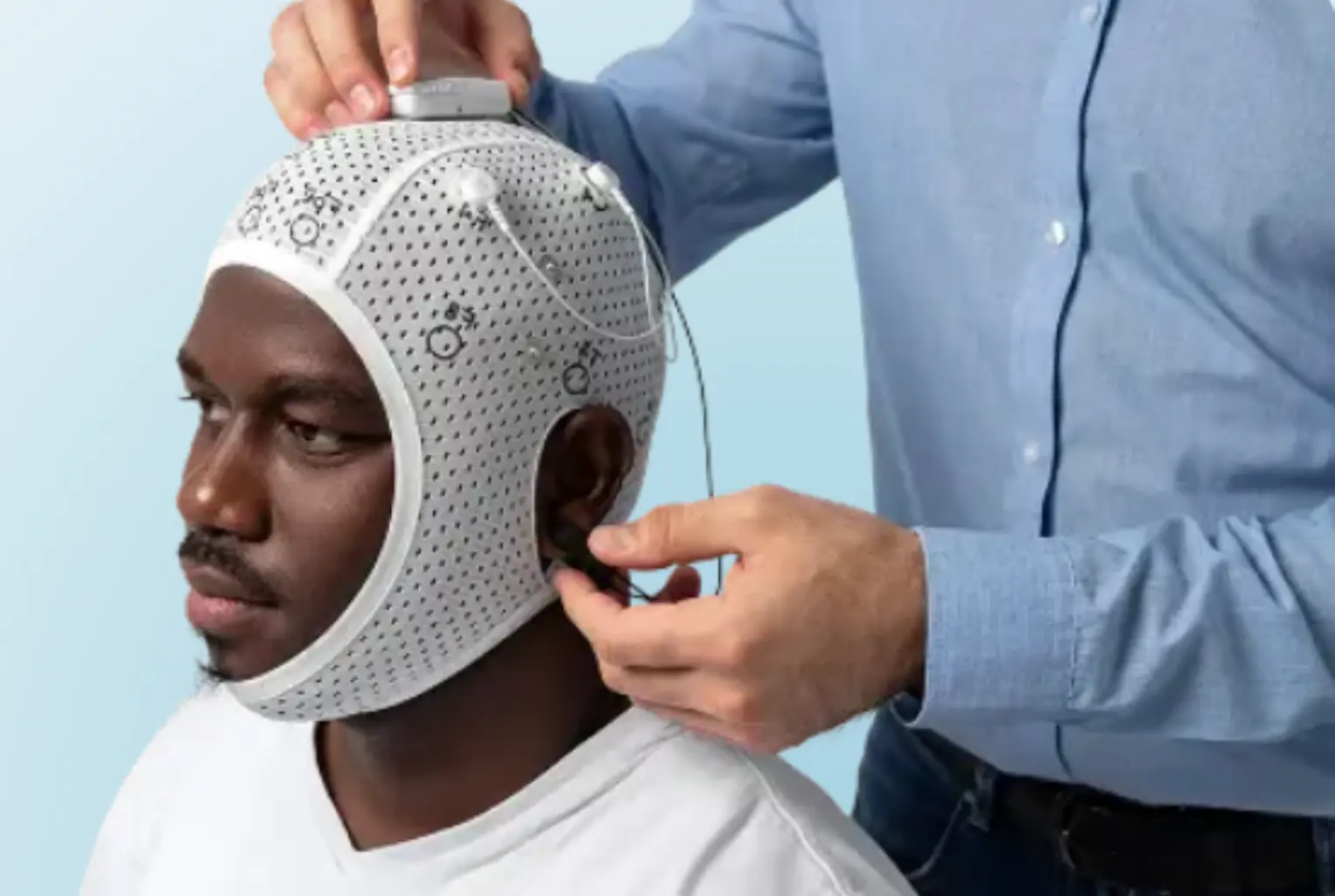
Because women’s ADHD symptoms are often internalised and masked, subjective self-report alone may not capture the full picture. Clinical interviews rely on the patient describing symptoms accurately — but years of masking can make women minimise their difficulties even to themselves.
A qEEG screening provides something different: objective brain data. It measures the theta/beta ratio — a biomarker recognised by the FDA-cleared NEBA system — directly from electrical brain activity. It does not rely on self-report, subjective observation or clinical interview. If your prefrontal cortex is underactivated, the data will show it — regardless of how effectively you have learned to mask.
This is particularly powerful for women who have been told they “don’t look like they have ADHD” or who have been given anxiety/depression diagnoses that never quite resolved the problem. The screening report provides evidence that can challenge assumptions and support a referral for full assessment.
Treatment considerations for women
ADHD treatment in women requires attention to factors that do not apply — or apply differently — in men:
Medication and hormonal interactions
Stimulant medication efficacy can fluctuate across the menstrual cycle. Some women find their medication feels less effective in the luteal phase when oestrogen is low. Strategies include adjusting the dose across the cycle (under specialist supervision), timing medication to align with peak demands, or discussing supplementary approaches with your prescriber. The NICE medication guidelines do not currently address hormonal interactions explicitly, but specialist ADHD clinicians are increasingly aware of this factor.
HRT and ADHD
For perimenopausal and menopausal women, hormone replacement therapy (HRT) can provide significant benefit by restoring the oestrogen support that dopamine function depends on. Some women find that HRT alone improves ADHD symptoms meaningfully; others need HRT alongside ADHD medication for optimal management. If you are experiencing worsening ADHD symptoms alongside menopause, discuss both HRT and ADHD medication with your specialist.
Pregnancy and medication decisions
Most ADHD medications are not recommended during pregnancy, though the evidence base is evolving. Women planning pregnancy should discuss a medication management plan with their prescriber well in advance. The period off medication during pregnancy and breastfeeding can be challenging, and having non-pharmacological strategies in place before conception is essential.
The emotional component
Medication addresses the neurochemical deficit but does not automatically resolve the psychological impact of years of undiagnosed ADHD. Many women benefit from therapy — specifically CBT adapted for ADHD or ADHD coaching — alongside medication. Processing the grief of late diagnosis, rebuilding self-esteem after decades of self-criticism, and learning to unmask in safe environments are all therapeutic goals that medication alone cannot address.
Getting diagnosed as a woman
If you suspect ADHD, here is a clear path forward:
- Get a qEEG screening. Objective brain data gives you evidence that subjective assessments may miss — especially if you are a skilled masker. Book a screening
- Book a GP appointment. Take your screening report and use our GP appointment guide — it includes scripts for handling the “you don’t look like you have ADHD” response
- Track your symptoms alongside your cycle. 2–3 months of data showing symptom fluctuation with hormonal changes is compelling evidence for any assessor
- Seek a specialist who understands female ADHD. Not all assessors are equally skilled at recognising inattentive presentation in women. Ask: “Do you have experience diagnosing ADHD in adult women?”
- Exercise your Right to Choose or consider private assessment to avoid the multi-year NHS wait
- Be honest about masking. During assessment, describe what your life actually looks like behind the mask — the effort, the exhaustion, the systems you have built to compensate. The assessor needs to see the real picture, not the performed one
For parents of girls
If you suspect ADHD in your daughter, the same principles apply but the stakes are higher. Girls who are missed in childhood face decades of unnecessary struggle. Push for assessment even if the school says she is “fine” — many girls with ADHD perform adequately at school through sheer effort, masking the underlying deficit. A child screening can provide objective evidence that bypasses the masking problem. Our parent’s guide covers SENCO meetings, EHCP applications, and school adjustments under the Children and Families Act 2014.
Frequently asked questions
Diagnostic criteria were built on male research. Women typically present with inattentive symptoms rather than hyperactivity. Socialisation teaches girls to mask from childhood. Hormonal fluctuations add complexity. And symptoms are frequently misdiagnosed as anxiety or depression. A 2026 Monash study concluded the gender gap reflects systemic underdiagnosis, not genuine lower prevalence.
Oestrogen supports dopamine function in the prefrontal cortex. When oestrogen drops in the luteal phase (days 15–28), ADHD symptoms typically worsen. The Monash study found 88% of women reported cycle-linked symptom changes. Track your symptoms alongside your cycle and share the data with your specialist.
The Monash study found 97% of women reported symptom worsening at menopause. Permanent oestrogen decline reduces dopamine support to the prefrontal cortex. Many women are first diagnosed with ADHD during perimenopause when lifelong coping strategies break down. Symptoms overlap significantly with menopause — brain fog, concentration difficulties, mood changes.
A qEEG screening measures brain activity objectively, regardless of how well you mask. This is particularly valuable for women whose ADHD is internalised and may not be captured by clinical interview alone. The theta/beta ratio reflects cortical underarousal whether or not you “look like you have ADHD.”