ADHD is one of the most common neurodevelopmental conditions in the UK. Understanding the neuroscience behind it explains why brain-based screening provides unique value.
What is ADHD?
Attention deficit hyperactivity disorder (ADHD) is a neurodevelopmental condition characterised by persistent patterns of inattention, hyperactivity, and impulsivity that interfere with daily functioning. According to the NICE clinical guidelines (NG87), ADHD affects approximately 3–5% of children and 2–4% of adults in the UK, though recent studies suggest prevalence may be higher than previously estimated, particularly among women and girls who are systematically underdiagnosed.
ADHD is not a behavioural choice or a parenting issue. It is a neurological condition with measurable differences in brain function. Research consistently shows that individuals with ADHD have altered patterns of electrical brain activity, particularly in the frontal and central regions responsible for executive function, sustained attention, working memory, and impulse control. These differences are detectable through quantitative electroencephalography (qEEG) — the technology we use in our screening service.
The three presentations of ADHD
ADHD presents differently in different people. The NHS describes three main presentations: predominantly inattentive (difficulty sustaining focus, easily distracted, forgetful in daily activities), predominantly hyperactive-impulsive (fidgeting, difficulty staying seated, excessive talking, acting without thinking), and combined presentation (features of both). Inattentive ADHD is particularly common in women and girls, and because it lacks the visible hyperactivity that teachers and parents notice, it is frequently missed entirely. Many adults seeking our screening have spent years wondering why they struggle with organisation, time management, and focus despite being intelligent and capable. Our qEEG screening does not distinguish between subtypes, but the theta/beta ratio pattern is consistently elevated across all three presentations, making it a useful objective data point regardless of which type of ADHD is suspected.
The current ADHD pathway in the UK
The standard route to an ADHD assessment in the UK typically involves a GP referral to a community mental health team, CAMHS (for children), or a specialist adult ADHD service. Average NHS waiting times now exceed two to five years in many areas, with some regions reporting waits of seven years or more. During this wait, children may fall behind academically, adults may struggle at work, and families experience significant stress without any formal support or reasonable adjustments.
When an assessment does eventually happen, it relies almost entirely on subjective measures: clinical interviews, behavioural questionnaires (such as the Conners Rating Scale, DIVA-5, or QB Test), school or workplace observations, and developmental history gathered from parents or partners. These tools are clinically valid and form the backbone of ADHD assessment worldwide, but they are inherently subjective — dependent on self-reporting accuracy, observer bias, the clinician's experience, and how the individual presents on that particular day. There is no standard brain measurement in the conventional NHS ADHD pathway, which is where our service fills a gap.
What qEEG adds to the picture
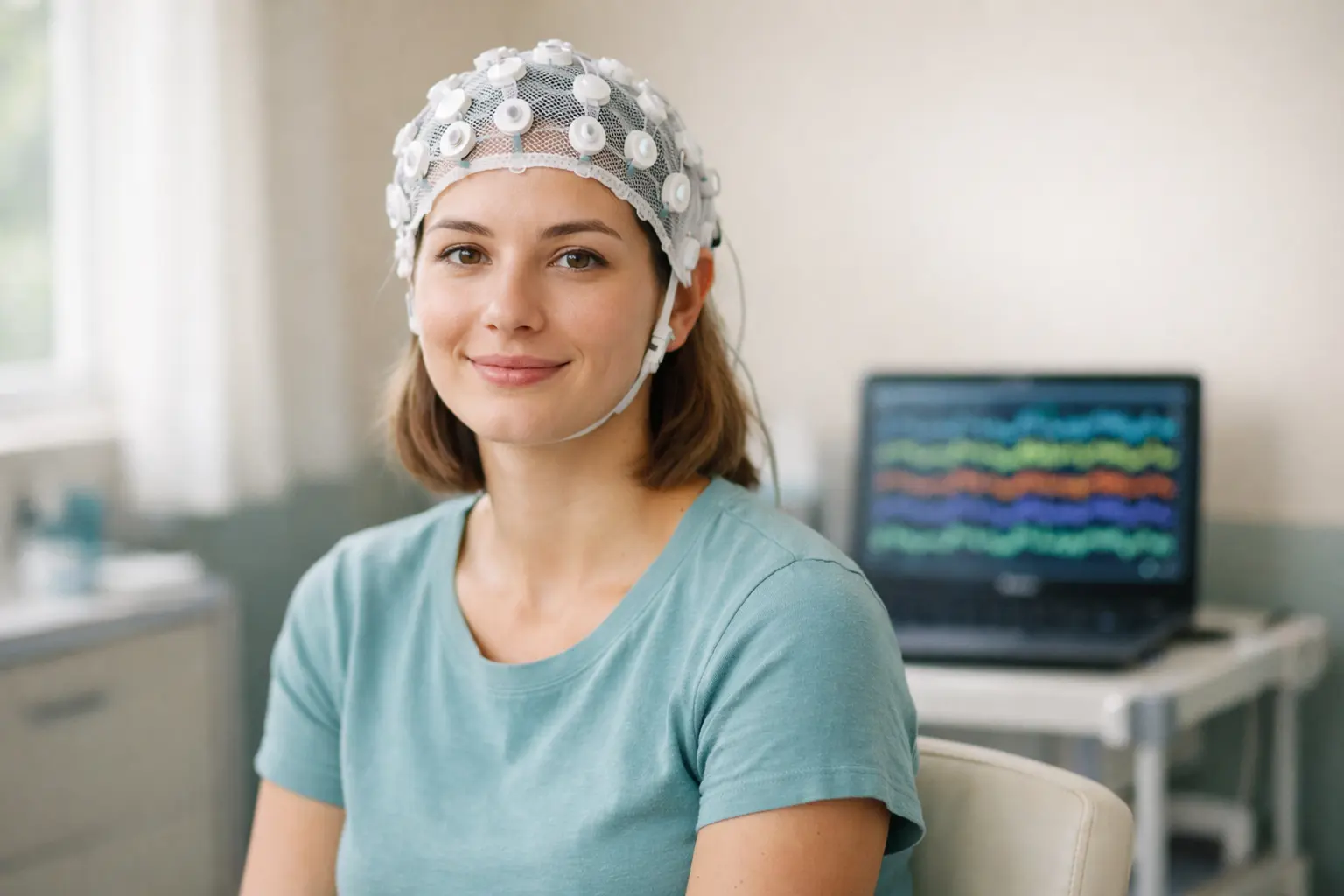
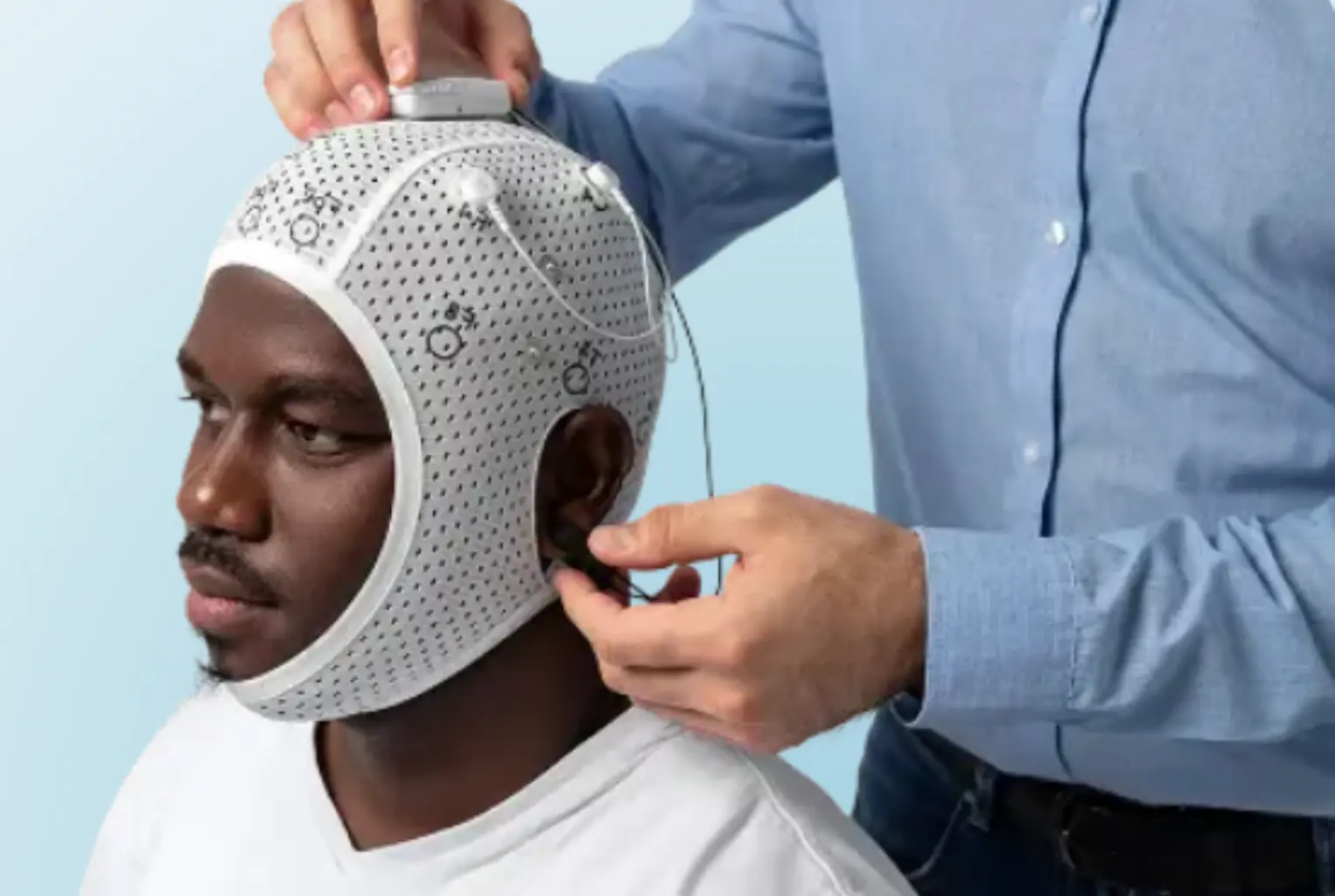
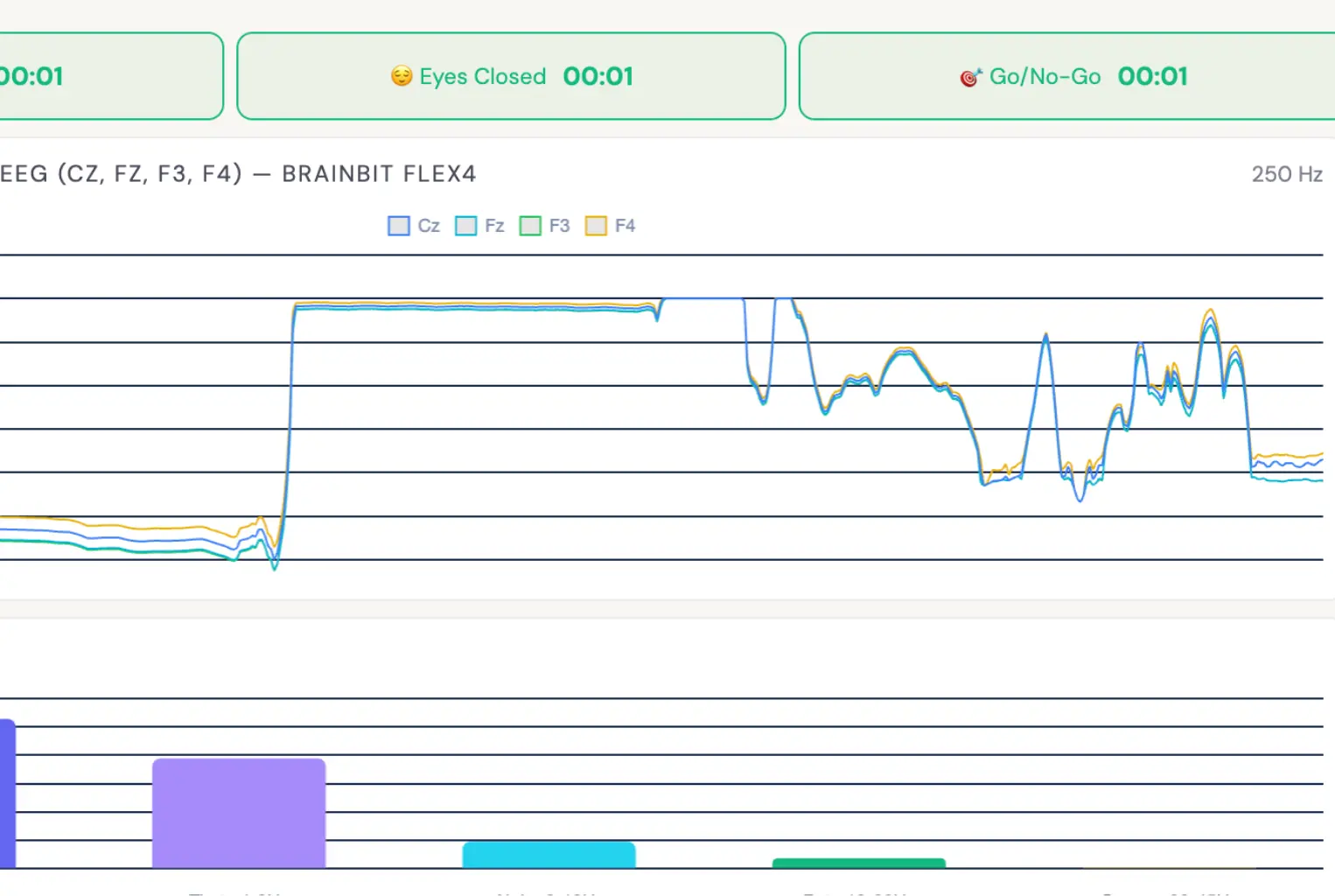
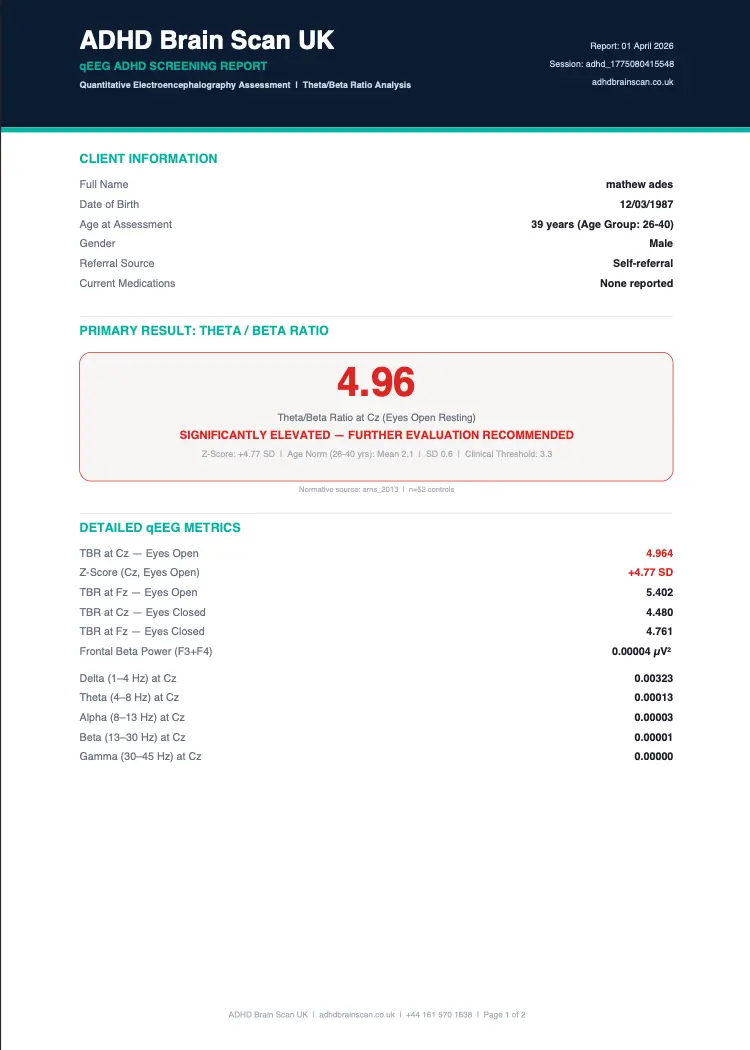
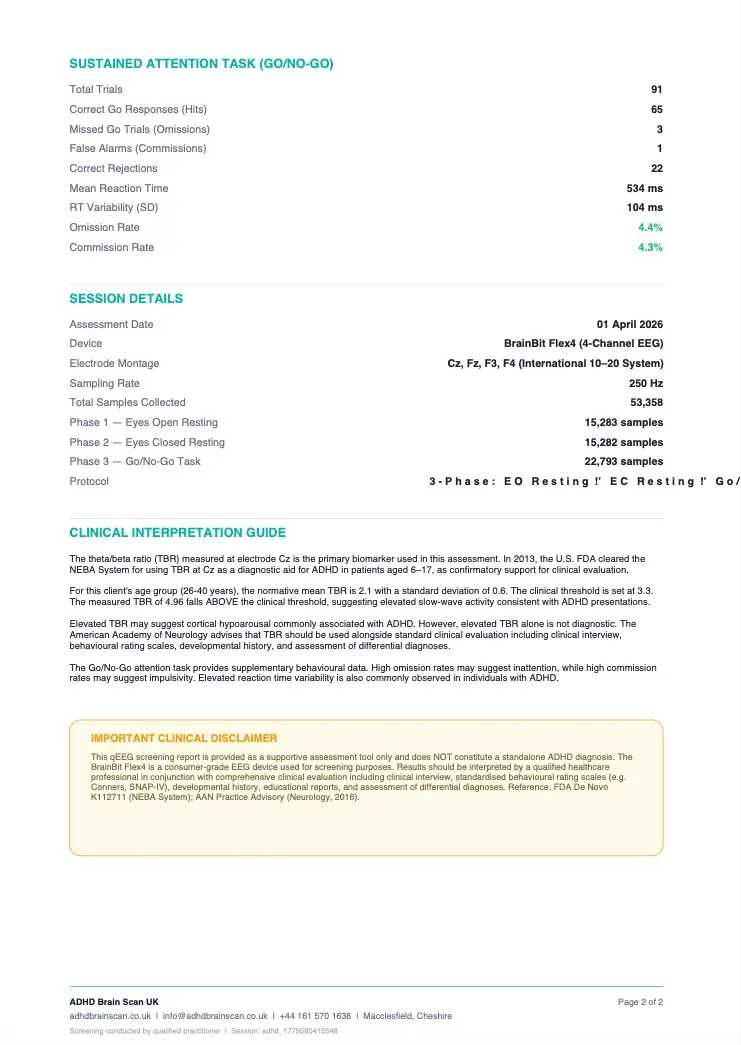
A quantitative EEG measures brain activity directly. The theta/beta ratio — the ratio between slow-wave (theta, 4–8 Hz) and fast-wave (beta, 13–30 Hz) activity at the central midline — is a well-established neurological marker that has been studied extensively since the 1990s. Individuals with ADHD consistently show elevated theta relative to beta, reflecting cortical underarousal in the prefrontal regions responsible for attention and executive function. In simple terms, the brain's "idle" waves are too dominant relative to its "alert" waves, particularly in the parts of the brain that control focus and self-regulation.
Unlike questionnaires, EEG data cannot be influenced by mood, motivation, social desirability bias, or how a person happens to feel on the day. It provides a quantitative measurement that can be compared against normative databases of healthy controls, producing a z-score that tells you exactly how far from the population average your brain activity falls. This is the same approach that led to the FDA's clearance of the NEBA System in 2013 as a diagnostic aid for ADHD in children and adolescents aged 6–17.
How is qEEG different from MRI, fMRI, or CT scans?
An MRI shows brain structure — the physical anatomy and white matter pathways. An fMRI shows blood oxygen level dependent (BOLD) signals associated with brain activity over several seconds. A CT scan uses ionising radiation to image brain tissue. None of these modalities are routinely used for ADHD assessment because they do not measure the millisecond-resolution electrical timing patterns that distinguish ADHD brains from neurotypical brains. A qEEG measures electrical brain wave patterns in real time with millisecond precision, capturing the exact cortical arousal patterns that decades of ADHD research have identified as neurological markers. It is also entirely non-invasive, takes only seven minutes of recording time, requires no radiation or contrast agents, produces no side effects, and is suitable for children as young as six years old. This combination of clinical relevance, safety, speed, and objectivity makes qEEG uniquely suited to ADHD screening.