ADHD often runs in families. Screen two children in one visit, with individual reports for each child and a family overview that highlights patterns across siblings. Save £95 compared to booking two separate screenings.
Each child receives the complete 7-minute qEEG protocol: eyes-open, eyes-closed, and Go/No-Go attention task. No shortcuts — the same rigorous protocol used for individual screenings.
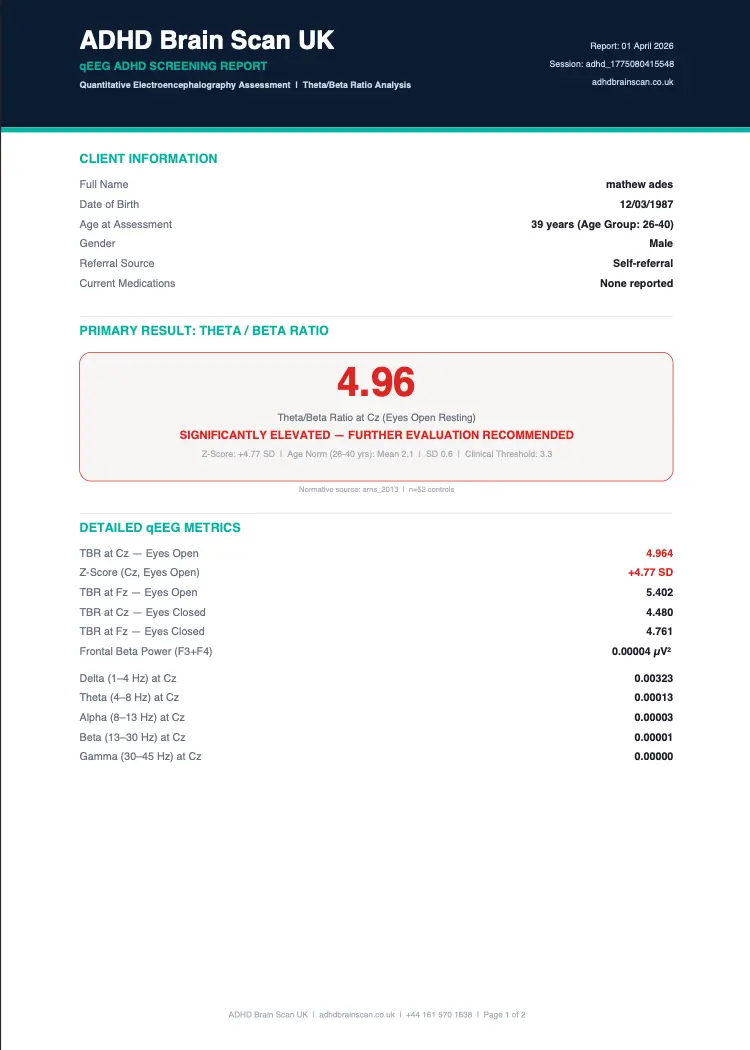
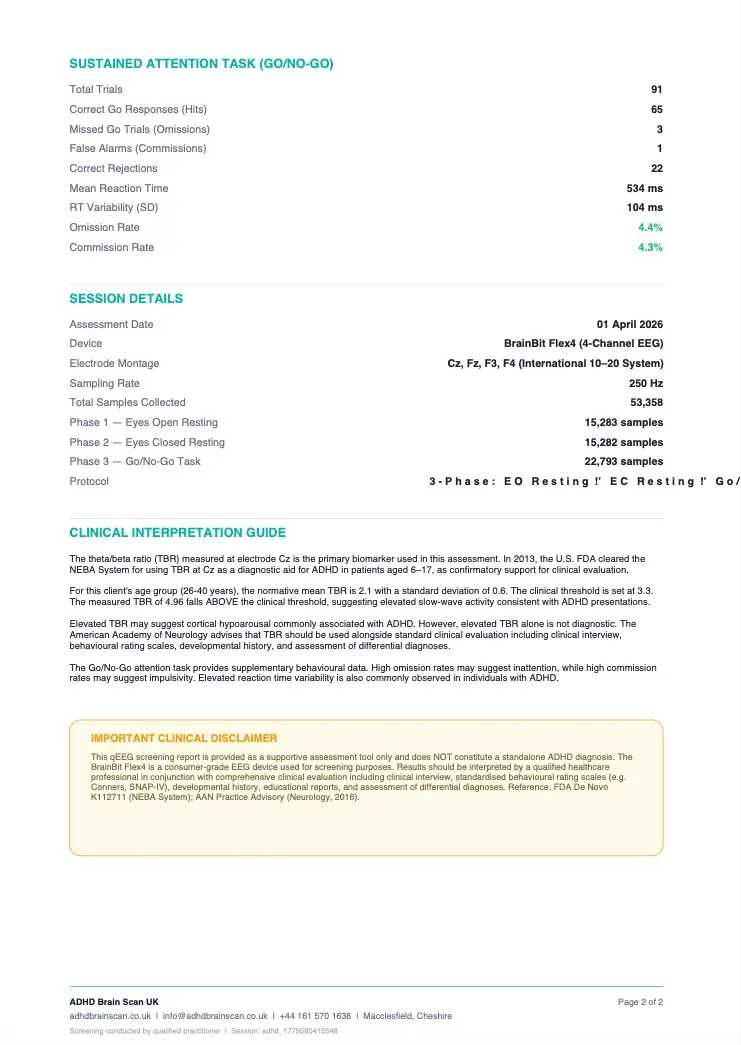
Each child gets their own full report with theta/beta ratio, z-scores, attention task results, and normative comparison specific to their age group.
Children of different ages are compared against different normative reference groups. A 7-year-old and an 11-year-old are measured against their own peer norms.
A comparative summary showing both children's results side by side, highlighting similarities and differences in their brain activity patterns. Ideal for presenting to your GP.
Individual recommendations for each child based on their specific results, including guidance on whether further assessment is warranted.
Two individual screenings would cost £1,190. The family package gives you both for £1,095 — plus the added value of the comparative family overview.
Many parents notice attention difficulties in more than one child. ADHD has a strong genetic component — if one child shows signs, siblings are statistically more likely to as well. Screening both children together means you get the full picture, can compare their profiles, and make informed decisions about next steps for each child individually.
ADHD has one of the strongest genetic components of any neurodevelopmental condition. Published research consistently estimates heritability at 70-80%, meaning that if one family member has ADHD, there is a significantly elevated probability that siblings, parents, or other first-degree relatives also have the condition. The NICE ADHD guidelines (NG87) acknowledge this familial pattern, and the NHS notes that ADHD tends to run in families.
This is why our Family Package exists. When one child shows signs of attention difficulties, there is a meaningful chance that siblings — even those who appear to cope well on the surface — may also have altered brain activity patterns consistent with ADHD. The inattentive presentation, particularly common in girls, often goes unnoticed because it lacks the visible hyperactivity that teachers and parents recognise. Without objective screening, these children can go years without support, falling behind academically while appearing "fine" to the adults around them.
One of the most common findings in our family screenings is that siblings with similar behavioural symptoms can have very different brain activity patterns. One child may show a significantly elevated theta/beta ratio consistent with the cortical underarousal model of ADHD, while their sibling's TBR falls in the borderline range. This information is clinically valuable because it helps families and clinicians prioritise which child needs formal assessment most urgently, and it provides objective evidence that each child's situation is distinct despite outwardly similar symptoms.
Our family overview report presents both children's results side by side, making these differences immediately visible. SENCOs and GPs find this comparative format particularly useful because it provides clear, visual evidence of each child's individual neurological profile. For EHCP applications, having individual reports for each child — each compared against age-matched norms from our database of 311+ research subjects including Arns et al. (2013) and Monastra et al. (1999) — provides exactly the kind of objective evidence that education panels require.
Both children attend a single appointment at our Macclesfield clinic. We screen one child while the other waits comfortably — we have puzzles, activities, and a calm waiting area. Each child receives the full seven-minute qEEG protocol: two minutes eyes-open, two minutes eyes-closed, and a three-minute Go/No-Go sustained attention task. The electrodes are positioned at international 10-20 system locations Cz, Fz, F3, and F4 — the exact sites used in published ADHD research and the FDA-cleared NEBA System. Each child's results are processed independently using age-specific normative data, ensuring accurate comparison regardless of age difference between siblings. Saturday morning appointments are particularly popular with families.
Each child receives their own individual professional PDF report the same day, with their theta/beta ratio z-scores, full frequency band analysis, and Go/No-Go attention task results compared against their specific age group norms. The family overview provides a side-by-side comparison. You can present these reports to your GP to support referrals for one or both children, use them for Right to Choose applications, submit them as evidence for EHCP applications, or present them to a private psychiatrist. Our parent's guide covers school support, exam access arrangements, and how to explain results to children in age-appropriate language. If either child goes on to receive a diagnosis and start medication, a follow-up medication comparison scan (£345) can objectively track the treatment response.
The family package covers any two people — it does not have to be two children. Many parents book themselves alongside their child, particularly when they recognise ADHD traits in themselves. Adult ADHD is significantly underdiagnosed, and parents who have spent years wondering why they struggle with organisation, time management, and sustained focus often find their own screening results illuminating. The American Academy of Neurology reports 89-94% accuracy when TBR data is combined with clinical evaluation, making our screening a valuable starting point for adults as well as children. If you want the additional consultation and clinical letter, you can upgrade either person's screening to our Comprehensive Assessment for £250 per person.
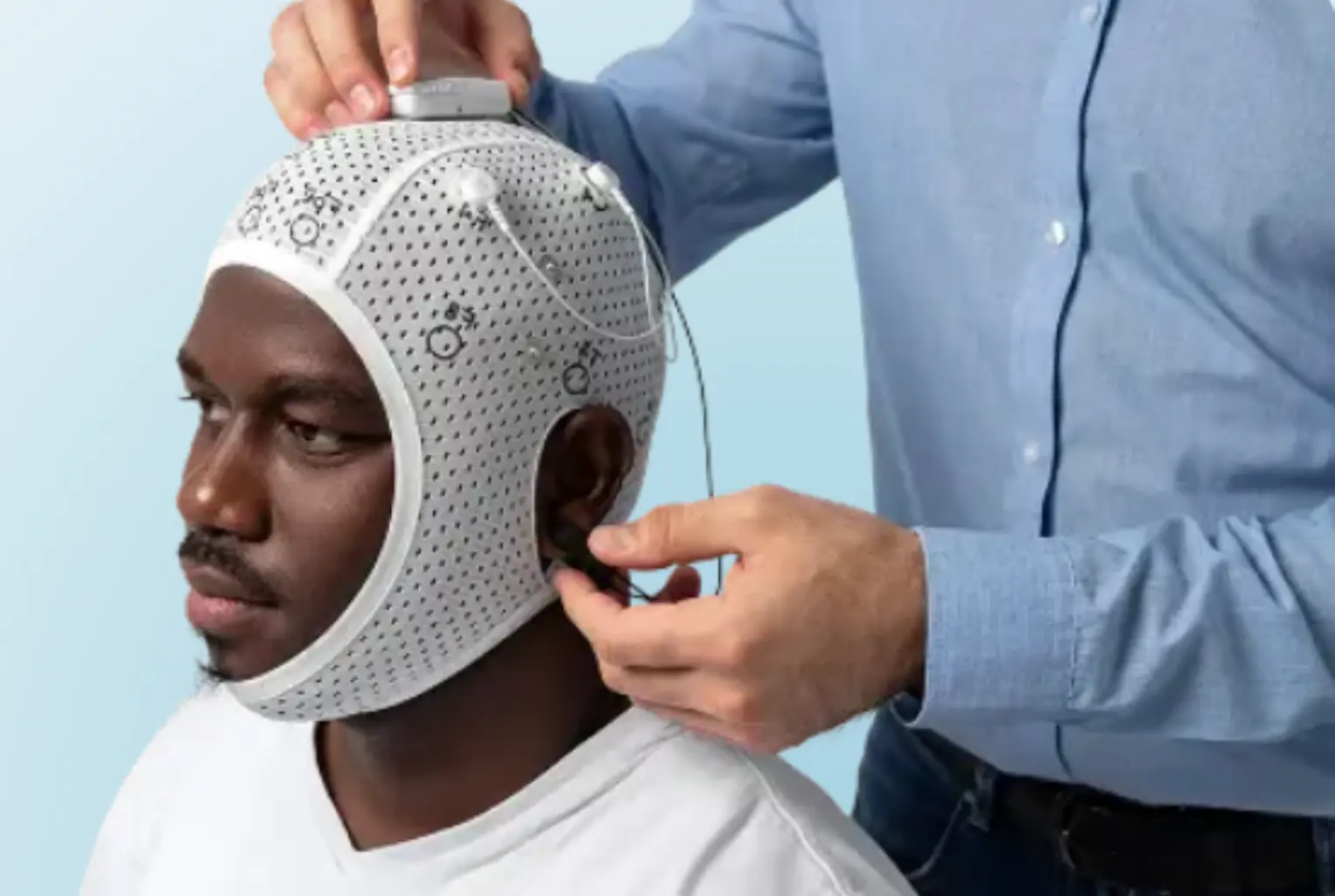
Certified EEG technician with hands-on experience conducting over 200 qEEG screenings for children, adolescents, and adults. Our protocol is based on the FDA-cleared NEBA System methodology and normative data from six published peer-reviewed sources.
Last reviewed: April 2026 · Sources: Arns et al. (2013), Monastra et al. (1999), FDA NEBA, NICE NG87
Need individual clinical letters? The Comprehensive Assessment (£845 each) adds formal letters for your GP, school SENCO, or psychiatrist. Already on medication? Add a Medication Comparison Scan (£345).
Contact us for a custom family quote. We offer additional sibling screenings at a discounted rate when booked alongside the family package.
Get in touch →Ideally yes — it's most convenient to screen both in one visit. One child does the scan while the other waits (bring a book or tablet). The total appointment is around 60 minutes for two children. However, if scheduling is difficult, we can split across two visits at no extra charge.
Both children must be aged 6 or above. There's no upper age limit. Each child is compared against their own age-specific normative group — a 7-year-old is measured against 6-7 year norms, a 12-year-old against 12-13 year norms. Siblings of different ages get equally valid, age-appropriate comparisons.
We understand — difficulty sitting still is often why you're here in the first place. The recording phase is only 7 minutes total. We're experienced with children who find it challenging, and we can take short breaks between phases if needed. If a recording is too noisy due to movement, we'll redo that phase at no extra charge.
In addition to individual reports for each child, you receive a comparative family overview that shows both children's results side by side: theta/beta ratios, z-scores, attention task performance, and frequency band profiles. This makes it easy for your GP or SENCO to see the full picture at a glance and understand the differences between siblings.
Absolutely. Contact us for a custom family quote. We offer additional sibling screenings at a discounted add-on rate when booked alongside the family package. We've screened families of three, four, and even five children in a single morning session.
Yes — ADHD has a strong genetic component. Research shows that if one child in a family has ADHD, siblings are 3-4 times more likely to also have it compared to the general population. This is exactly why the family package exists: if one child is showing signs, it's clinically sensible to screen siblings too, even if their symptoms present differently.
Yes. Our reports provide objective neurological data that SENCOs and educational psychologists can use to support SEN assessments, EHCP applications, and classroom adjustment requests. Having individual reports per child means each child's educational needs are documented independently with their own normative comparison.
Two individual ADHD Brain Screenings would cost £1,190 (2 × £595). The family package is £1,095 — a saving of £95, plus you get the comparative family overview report that isn't available with individual screenings. If you want the comprehensive package features (consultation + clinical letter) for each child, ask about our family comprehensive upgrade.
Completely safe and completely painless. The sensors simply sit on the scalp and listen to the tiny electrical signals the brain naturally produces. No electricity enters the body. No radiation. No side effects. Children aged 6 and above tolerate the cap well — the hardest part is sitting still for a few minutes, which most children manage without difficulty.
Yes — many parents discover they also have ADHD after their children are screened. Adult ADHD is significantly underdiagnosed, especially in women. We can add an adult screening to a family visit at a discounted rate. Contact us to arrange a combined family and adult session.
A 60-second look at the ADHD brain screening experience.
Secure online payment. We'll confirm your appointment within 24 hours.