Wondering if you or your child has ADHD? Our qEEG brain screening is available for clients from Plymouth and across Devon. Real brain data, not just questionnaires. A 30-minute session that provides the objective neurological evidence your GP, school, or employer needs to act. See our next steps guide for what happens after.
ADHD doesn't pause while you wait for an NHS appointment. Near Plymouth and across Devon, children miss critical school years, adults lose jobs, and families reach breaking point — all while sitting on waiting lists that offer zero interim support.
During that wait, there's no data. No evidence for the school. No basis for workplace accommodations. No objective information for your GP to act on. Just a waiting list number and the vague promise that "someone will be in touch." Years pass. GCSEs happen without support. Career opportunities are missed.
We exist to fill that gap. A 30-minute qEEG brain screening provides objective neurological data — the same day, with no waiting list. Evidence your GP can use for an urgent referral, your school can use for EHCP applications, and you can use to understand what's actually happening in the brain.
Many clients ask: 'how is this different from a private psychiatric assessment?' The answer is that they measure different things. A psychiatric assessment is a clinical interview — an experienced clinician asks questions, observes behaviour, reviews history, and forms a clinical judgment. It's the gold standard for diagnosis.
Our qEEG screening provides something that interview cannot: a direct measurement of cortical electrical activity. The two approaches are complementary, not competing. Brain data + clinical interview = the most accurate diagnostic pathway, according to the American Academy of Neurology.
That's why many private psychiatrists actively welcome clients who bring our screening data to their assessment. It gives them an additional objective data point, makes the interview more focused, and strengthens the confidence of the eventual diagnosis.
Read the full breakdown of the research behind our screening on our ADHD brain science page.
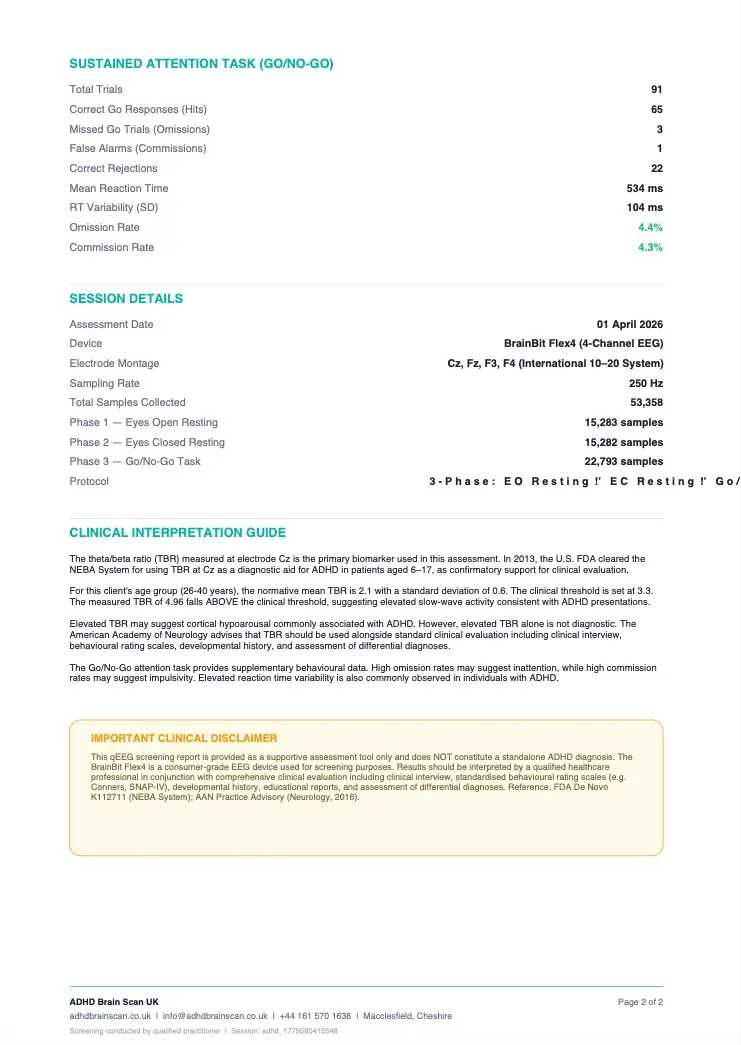
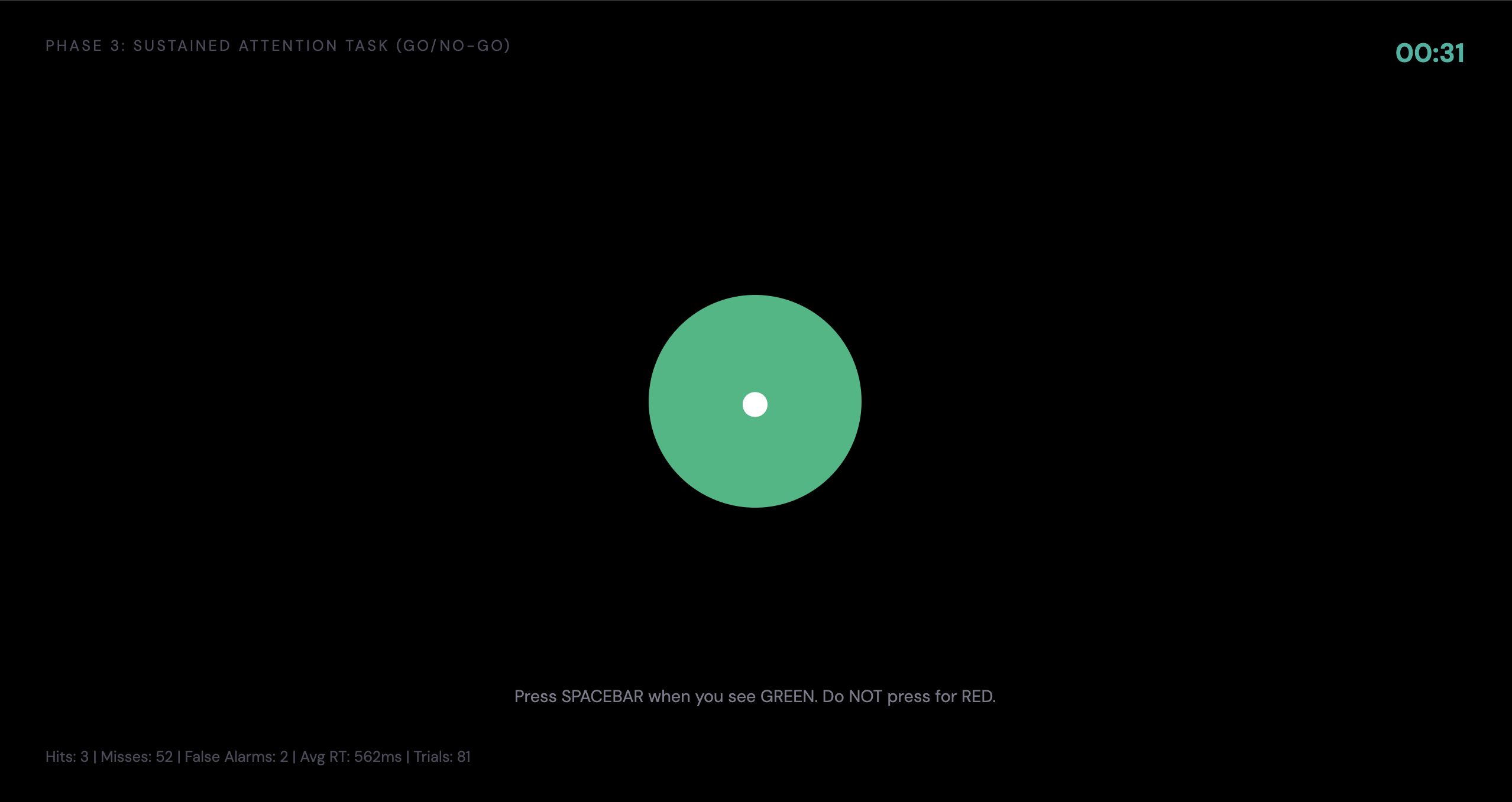
Every screening follows our standardised 3-phase, 7-minute protocol. The resting-state phases capture your brain's baseline electrical patterns without task demand. The Go/No-Go phase adds cognitive demand, measuring four metrics: hit rate, miss rate, false alarm rate, and reaction time variability.
Combined with the resting-state TBR data, these provide a comprehensive picture of neurocognitive function. Research from the American Academy of Neurology found that when TBR data is combined with clinical evaluation, diagnostic accuracy reaches 89–94%.
See the full step-by-step process on our how it works page, or visit our FAQ for common questions.
For adults who've suspected ADHD for years, the screening often brings a mix of curiosity and nerves. Will the data confirm what you've always felt? What if it doesn't? Either way, the process itself is straightforward and low-pressure.
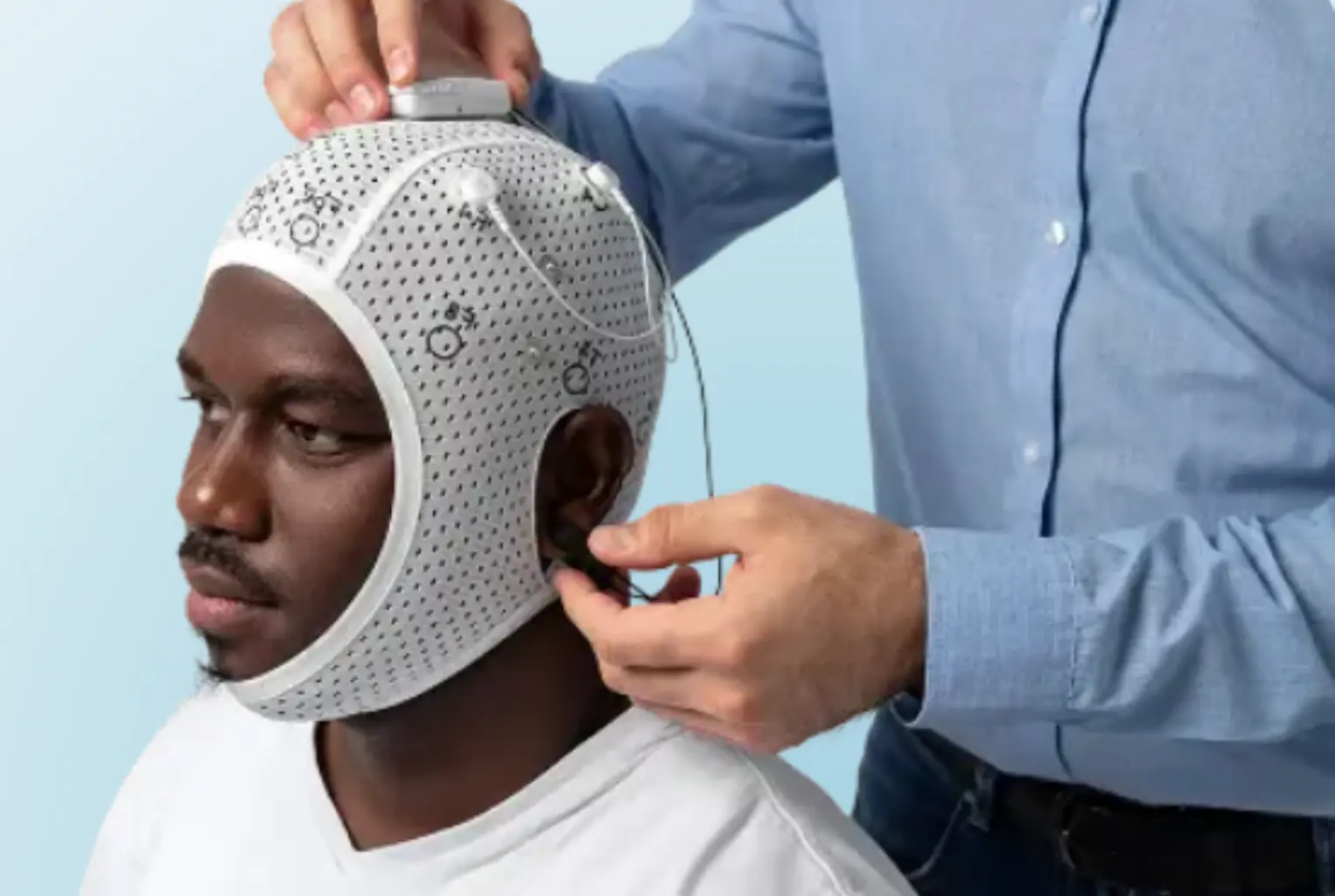
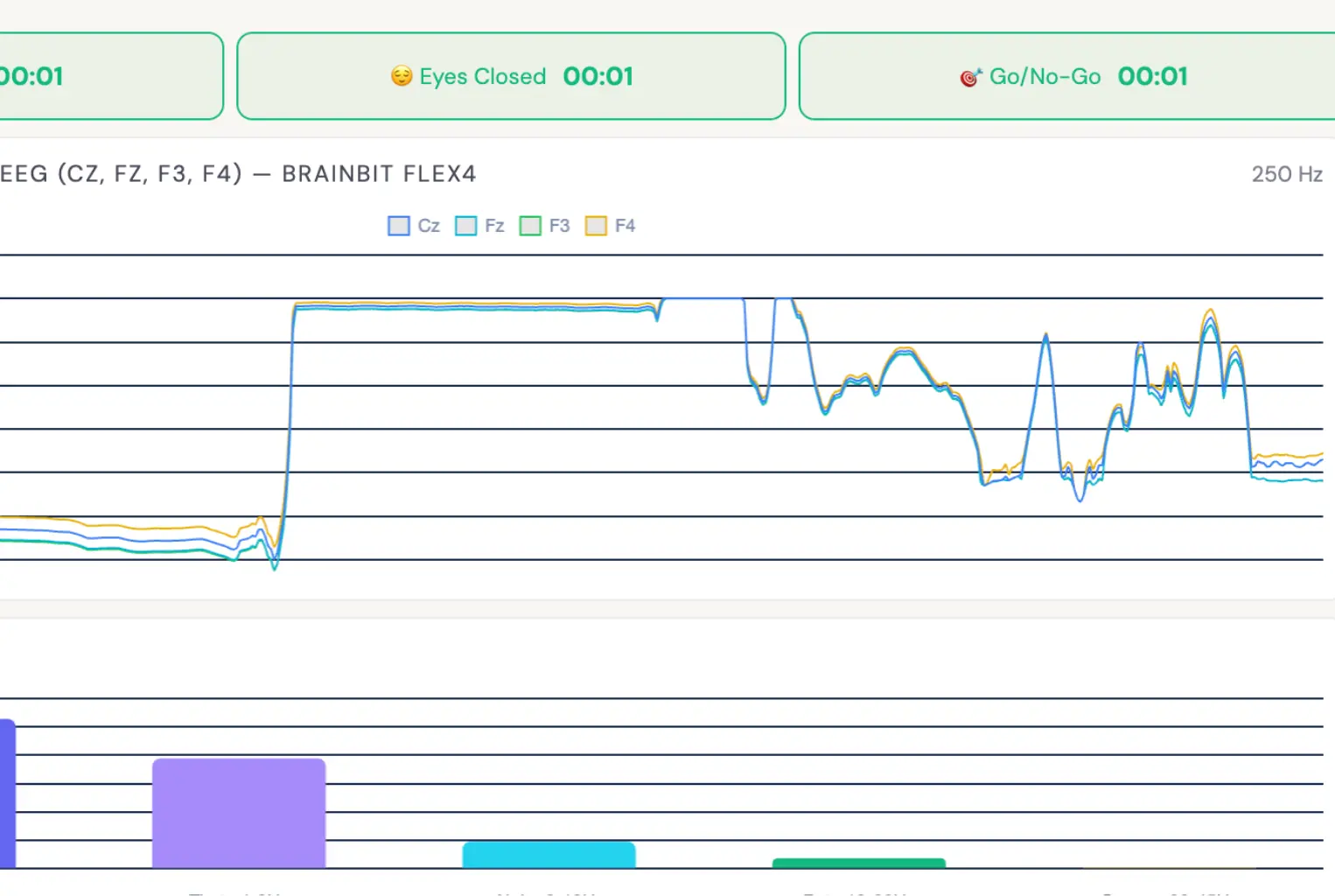
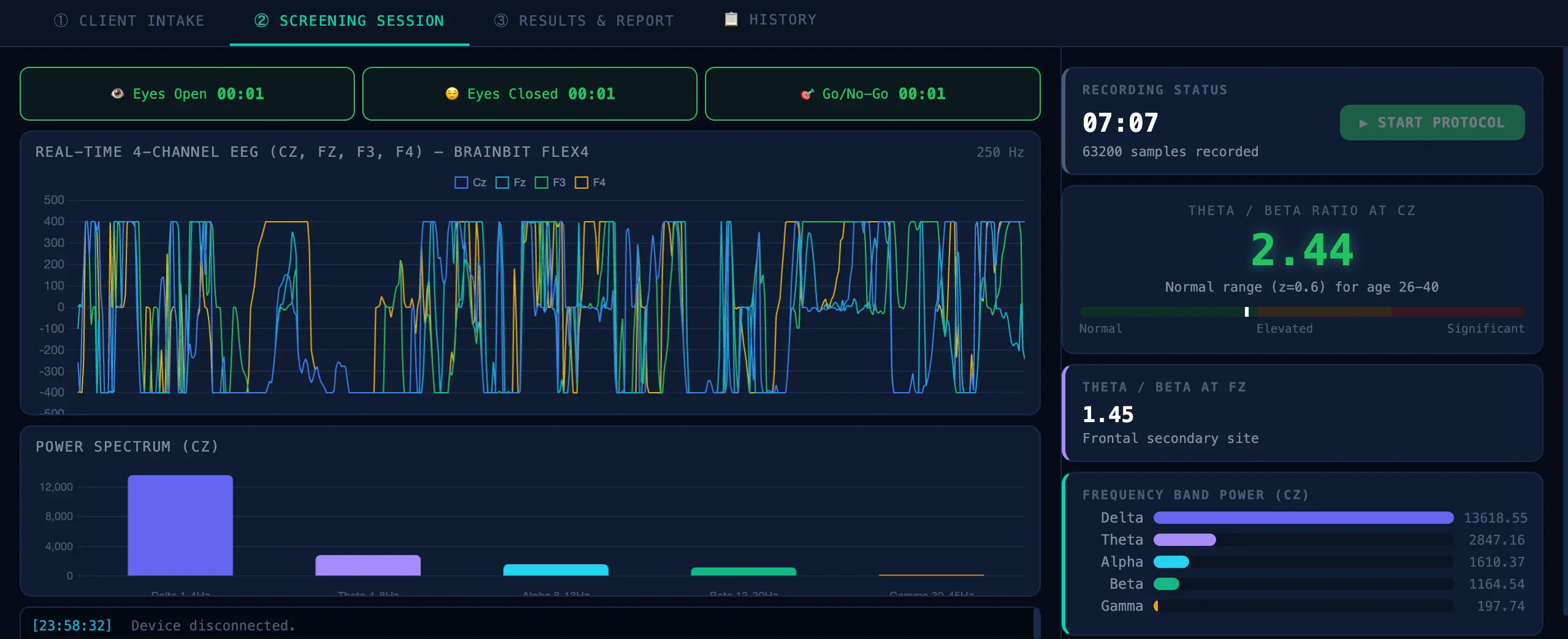
You'll sit in a comfortable chair in a quiet, private room. The lightweight cap goes on in under a minute — four dry electrodes, no gel, no preparation. During the 7-minute recording, you'll look at a fixation cross (2 min), close your eyes (2 min), and complete a simple Go/No-Go attention task (3 min). Your brain waves appear on screen in real time.
Many adults tell us the most powerful moment is seeing their theta activity spike the instant their mind wanders — for the first time, they can see what their brain has been doing their entire life. After screening, our next steps guide explains every pathway from screening to diagnosis, including coping strategies you can start immediately.
Preparing a teenager for the screening? Keep it simple and low-pressure. Explain it as: 'they put a cap on your head that listens to your brain waves for 7 minutes, and then there's a quick game on screen.' Most teens are more interested than anxious once they understand there are no needles, no blood, and no awkward questions.
Practical preparation is the same as adults: clean hair (no wax or gel), normal sleep, normal food, one coffee maximum. If your teenager takes ADHD medication and this is a baseline screening, skip the morning dose — we need to see the unmedicated brain. If it's a comparison scan, take medication as normal.
After screening, our parent's guide explains exam access arrangements (25%% extra time, rest breaks, separate room), EHCP applications, and how to present the report to your child's school SENCO.
For more detail on the full process from booking to report, see how it works.
We screen children aged 6 and above, teenagers, and adults of all ages from Plymouth and across Devon. Each person is compared against age-matched normative data from published research — because a 7-year-old's brain is neurologically very different from a 40-year-old's.
For children, the most common scenario is parents who've been told their child "just needs to try harder." For teenagers, it's GCSE or A-level pressure exposing hidden attention difficulties. For adults, it's often a lifetime of wondering — sometimes triggered by a child's diagnosis.
Women and girls are particularly underserved by standard assessment. The inattentive presentation — quiet, dreamy, internally restless — is systematically missed by questionnaires designed around hyperactive boys. Our brain screening measures neurology directly, bypassing the behavioural bias.
Learn more: children 6+ · teenagers · adults · women & girls
View packages: standard screening (£595) · comprehensive (£845) · family package (£1,095) · all pricing
After your screening: ADHD support hub · results explained · what to do next · GP appointment guide · parent's guide
Gifted children present a particular diagnostic challenge. High intelligence can mask ADHD symptoms for years — the child compensates through sheer cognitive ability until the demands of secondary school outstrip their coping strategies. The result: a bright child who suddenly 'falls apart' at GCSE level, seemingly out of nowhere.
Conversely, some children are labelled as having ADHD when they're actually gifted and bored. The behavioural presentation — fidgeting, inattention, disruptive behaviour — can look identical. Brain data helps: gifted-but-bored children typically show normal theta/beta ratios, while gifted-with-ADHD children show the characteristic elevation.
This is another reason objective data matters. Behaviour can mislead. Questionnaire responses depend on the observer's interpretation. Brain electrical activity doesn't lie, doesn't mask, and doesn't compensate. It simply shows what the cortex is doing. Our parent's guide explains how to use screening data for school support and EHCP applications.
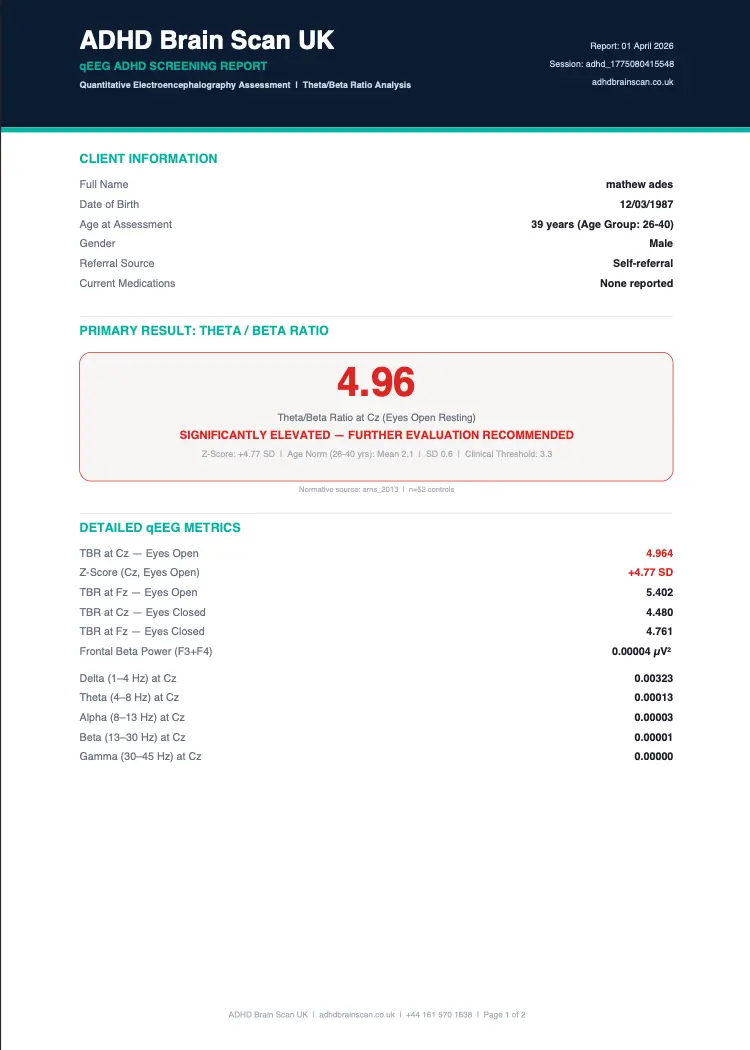
Every screening produces a detailed same-day report with theta/beta ratios, z-scores, frequency band analysis, and Go/No-Go attention task results — all compared against published age-matched norms.


This is the standard report included with our ADHD Brain Screening (£595). The Comprehensive Assessment (£845) adds a clinical interpretation letter addressed to your GP, school, or employer.
Objective brain data with z-scores gives your GP the evidence to write a stronger referral or submit a Right to Choose application.
SENCOs use our reports for EHCP applications, SEN register placements, and JCQ exam access (extra time, rest breaks).
Adults use the clinical letter for Access to Work applications — government-funded coaching, headphones, assistive technology.
Brain data gives a private psychiatrist an objective data point they wouldn't otherwise have, making assessment more focused.
Already on medication? A follow-up medication comparison scan (£345) shows objective before-and-after changes.
Still on the NHS waiting list? Our report gives you actionable evidence for school, work, and GP support right now.
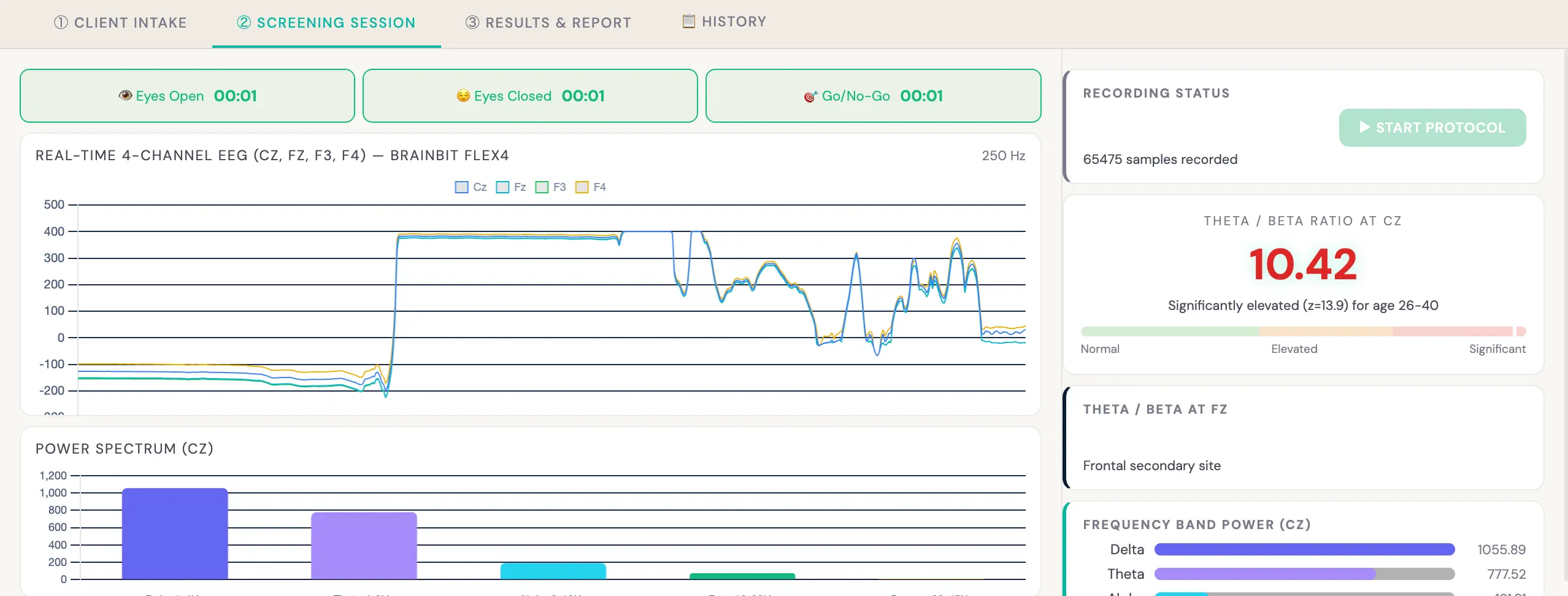
During your screening, you'll see your own brain waves updating in real time on screen. Here's what the testing dashboard looks like during each phase of the 7-minute recording.


Want to understand what each screen means? Our science page explains every frequency band and what elevated theta looks like in real data.
The screening report is designed to be actionable from day one. It's not a document that sits in a drawer — it's a key that opens specific doors. GP door: the clinical letter is formatted for medical professionals, with z-scores, methodology, and peer-reviewed citations. School door: the same letter addresses SENCO and EHCP requirements directly. Employer door: the letter provides the objective evidence required for Access to Work and reasonable adjustment requests.
We also provide guidance on what to say in each context. Our comprehensive package (£845) includes a 20-minute consultation where we walk you through the results AND advise on next steps specific to your situation — which pathway makes most sense, what to say to your GP, what to request from the school.
We always recommend staying on the NHS waiting list while pursuing our screening. The NHS pathway leads to fully-funded ongoing care. Our screening gives you evidence and support in the meantime — and data that strengthens your case when the NHS appointment finally arrives.
We don't operate from a hospital or a GP surgery — our screenings take place at carefully selected private venues across the region. They're quiet, comfortable, and designed to put you at ease. From Plymouth, we'll confirm the most convenient venue when you book.
For clients who prefer screening at home, we offer a full home visit service across Devon. A qualified tester arrives with all equipment, sets up in any quiet room, and delivers the same professional screening and same-day report. No clinical environment needed — just a chair, a table, and 30 minutes.
ADHD Brain Screening is £595 (scan + same-day PDF report). Comprehensive Assessment is £845 (scan + consultation + clinical letter). Family Package is £1,095 (two screenings). Medication Comparison Scan is £345.
No. This is an objective brain screening providing quantitative neurological data to support clinical evaluation. ADHD diagnosis requires a qualified clinician. Our report provides powerful supporting evidence.
About 30 minutes from arrival to departure. The brain recording itself is 7 minutes. Setup takes about 5 minutes. Your report is delivered the same day by email.
Yes. SENCOs across Devon use our reports for EHCP panel submissions and JCQ exam access (extra time, rest breaks, separate room). The comprehensive clinical letter is designed for educational contexts.
We understand — difficulty sitting still is often why you're here. Recording is only 7 minutes with breaks available. If a phase is too noisy, we redo it free. If your child can't tolerate the cap, we offer a free retry.
Right to Choose lets you be assessed by a private provider at NHS expense. Your GP submits the referral. Our clinical letter provides objective evidence that helps GPs feel confident making that referral.
ADHD Brain Screening is £595 (scan + same-day PDF report). Comprehensive Assessment is £845 (scan + consultation + clinical letter). Family Package is £1,095 (two screenings). Medication Comparison Scan is £345.
No. This is an objective brain screening providing quantitative neurological data to support clinical evaluation. ADHD diagnosis requires a qualified clinician. Our report provides powerful supporting evidence.
Yes. The theta/beta ratio has been studied for over 30 years, replicated across hundreds of independent studies, and was referenced in the FDA's 2013 clearance of the NEBA System for ADHD evaluation. The International Society for Neurofeedback and Research (ISNR) rates qEEG assessment as Level 1 (Best Practice) for ADHD. It's well-established science, not experimental. Our ADHD brain guide explains the neuroscience in plain English.
No. Screening provides objective data; diagnosis requires comprehensive clinical assessment by a qualified professional. Our screening gives you neurological evidence to support the diagnostic process — it doesn't replace it. Think of it as providing the brain data that questionnaires and interviews cannot capture, making the eventual diagnosis more accurate and evidence-based. Our next steps guide explains every pathway from screening to formal diagnosis.
If you're currently waiting years on the NHS list with no support, paying £595–£845 for same-day objective data that can unlock GP referrals, school support, workplace accommodations, and Right to Choose applications is highly cost-effective. Many clients tell us the screening paid for itself within weeks through the support it unlocked.
Our reports include peer-reviewed citations, z-scores against published normative data, and formal clinical interpretation letters. Many GPs across the UK have used our reports to support CAMHS referrals, Right to Choose applications to Psychiatry-UK, and urgent assessment requests. The report is designed to be credible and actionable within the NHS system. Our GP appointment guide includes scripts for presenting your results.
No GP referral is needed. You can book directly online or by phone. Many clients book the screening first, then take the objective results to their GP as evidence to support a formal referral. Having brain data in hand often makes the GP conversation significantly more productive — our GP appointment guide shows you exactly what to say.
Yes. The theta/beta ratio has been studied for over 30 years, replicated across hundreds of independent studies, and was referenced in the FDA's 2013 clearance of the NEBA System for ADHD evaluation. The International Society for Neurofeedback and Research (ISNR) rates qEEG assessment as Level 1 (Best Practice) for ADHD. It's well-established science, not experimental. Our ADHD brain guide explains the neuroscience in plain English.
Signs, age norms, school evidence, what parents need to know
Decades of masking, late diagnosis, workplace impact
Inattentive type, misdiagnosis as anxiety, hormonal triggers
GCSE/A-level pressure, exam access, university prep
NHS-funded private assessment in months, not years
4 things you can do while you wait
What to say, what to bring, how to get referred
School applications, exam access, SENCO guidance
Free coaching, tech, and adjustments for employed adults
Share this page with someone near Plymouth who might be waiting for answers.
A 60-second look at the ADHD brain screening experience.
Same-day report. Evidence your GP will take seriously. From £595.