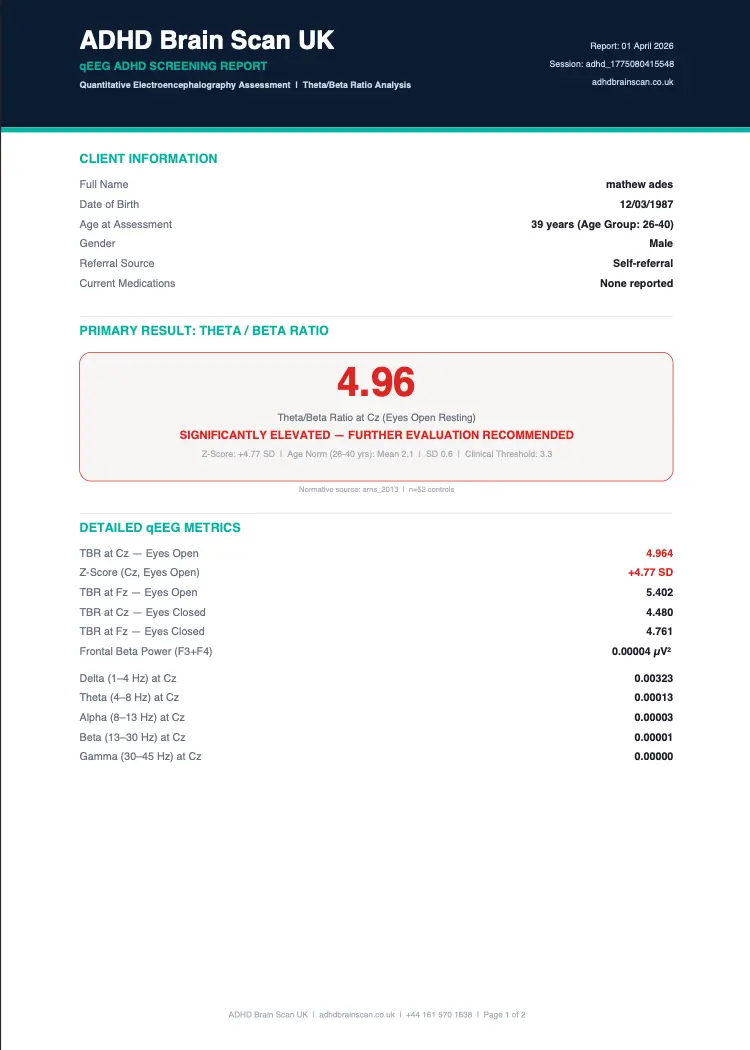
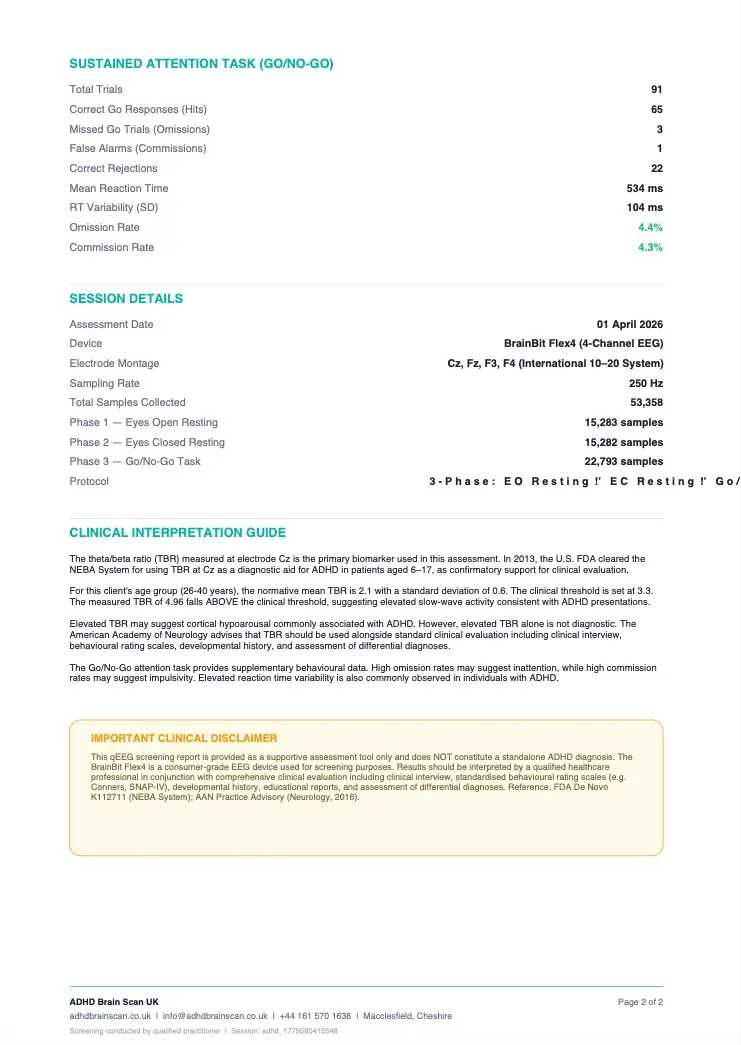
Near Southampton and your GP refused to refer? Our clinical letter changes the conversation. It contains z-scores against published normative data, peer-reviewed citations, and a clear clinical recommendation. Multiple clients have returned to GPs who previously refused — and been referred the same day after presenting our report.
The cost of the ADHD assessment crisis extends far beyond healthcare. Untreated ADHD costs the UK economy an estimated £12.7 billion per year in lost productivity, unemployment, and criminal justice involvement. For individuals near Southampton, it means careers stalled, relationships strained, educational potential wasted, and mental health eroded by years of struggling without understanding why.
Right to Choose is not just a clinical pathway — it is an economic intervention. A diagnosed and treated adult with ADHD earns more, stays employed longer, and costs the NHS less in secondary mental health presentations. The same is true for children: early identification and treatment improves educational outcomes, reduces school exclusions, and prevents the secondary mental health conditions that develop when ADHD goes untreated.
Our brain screening accelerates this entire process. For £595–£845, you get the evidence that activates a free NHS pathway leading to diagnosis, treatment, and support. It is, objectively, one of the highest-return health investments you can make.
Right to Choose and private assessment are not mutually exclusive. Some clients near Southampton use our brain screening for immediate evidence (school, work, GP), then pursue Right to Choose for the free formal assessment, and if the RtC wait extends beyond expectations, pivot to a fully private assessment using the same screening report. The brain data is valid and useful regardless of which pathway you choose.
Others combine approaches differently: brain screening now, Right to Choose referral submitted, and while waiting use the report for Access to Work application (which requires a different evidence threshold than diagnosis). The Access to Work assessor may accept objective neurological evidence alongside other supporting documentation, even before formal diagnosis.
The point is flexibility. Our screening report is not locked to one pathway — it supports every route to diagnosis and support simultaneously.
Step 1 — Get screened. Book our comprehensive assessment (£845) which includes the clinical letter your GP needs. Same-week appointments available. You will have your report and clinical letter the same day.
Step 2 — Prepare for your GP. Read our GP appointment guide. Book a double appointment (20 minutes). Bring: the clinical letter, a completed ASRS questionnaire (adults) or Conners scale (children), written examples of functional impairment, and any old school reports showing childhood difficulties.
Step 3 — Request the referral. Tell your GP: 'I would like to exercise my Right to Choose and be referred to Psychiatry-UK for ADHD assessment.' Present your evidence pack. Key points if they hesitate: Right to Choose is a legal right under Section 3a of the NHS Constitution; Psychiatry-UK has a formal NHS England partnership; the referral process uses standard e-RS; there is no cost to the GP practice.
Step 4 — GP submits the referral. The GP submits through the NHS e-Referral Service or the provider's online form. Your screening report and clinical letter should be attached.
Step 5 — Assessment (3–6 months). The provider contacts you to schedule. Typically a 60–90 minute video assessment. They review all evidence including our brain data, conduct a clinical interview, and make a diagnostic decision. If ADHD is confirmed, medication is initiated and shared care is arranged with your GP.
Objective brain data does three things that self-report cannot. First, it removes the bias inherent in questionnaires — particularly important for women who mask, adults who have developed sophisticated coping strategies, and children who behave differently in clinic than in the classroom. Second, it provides a quantified measurement expressed as a z-score — a language every clinician understands instantly. Third, it gives the GP a defensible clinical basis for the referral — something they can point to in the patient record that justifies the decision.
Multiple clients from Southampton have reported that presenting the clinical letter to their GP resulted in an immediate shift in the conversation. GPs who had previously said 'let's wait and see' or 'try these coping strategies first' moved directly to submitting the Right to Choose referral once they saw the objective neurological data.
Objective z-scores and peer-reviewed citations are significantly harder to dismiss than self-reported symptoms. GPs near Southampton respond to evidence.
GPs who include our data in their referral letter give the receiving provider more context, leading to a more focused and efficient assessment.
During the 3–6 month wait, use the report for EHCP applications, Access to Work, and employer reasonable adjustments.
If diagnosed, your baseline data enables a follow-up comparison scan (£345) to objectively track medication response.
Brain screening (£595–£845) + Right to Choose (free) + shared care (NHS). Total: under £850 for a complete diagnostic pathway.
The Right to Choose assessor reviews all evidence. Objective brain data adds a dimension that no other patient typically brings to the assessment.
A third option is fully private assessment (£700–£1,500), which has the shortest wait (2–8 weeks) but you pay the full cost. Many people from Southampton combine approaches: brain screening (£595–£845) + Right to Choose assessment (free) + Access to Work support (free). Total out-of-pocket: the screening only. View all pricing options.
We provide Right to Choose evidence for children aged 6+, teenagers, adults, and women & girls who are systematically underdiagnosed by questionnaire-based assessment.
Each person is compared against age-matched normative data from published research. The clinical letter is tailored for Right to Choose referral submissions, with z-scores, peer-reviewed citations, and specific recommendations your GP can act on immediately.
View packages: standard screening (£595) · comprehensive (£845) · family package (£1,095) · all pricing
After your screening: ADHD support hub · results explained · what to do next · GP appointment guide · medication guide · coping strategies · workplace rights · ADHD in women · parent's guide · relationships guide · sleep guide · exercise & ADHD
No. Right to Choose is a legal right under Section 3a of the NHS Constitution. Your GP cannot refuse the right itself — they can only decline to refer for ADHD if they believe it is not clinically warranted. Objective brain data makes that position very difficult to justify. If they refuse, ask for the refusal in writing and request a second opinion.
Yes. Right to Choose applies to children and teenagers as well as adults. Parents request the referral through their child's GP. The family package (£1,095) screens two family members for Right to Choose evidence.
Typically 3–6 months from GP referral to assessment. This varies by provider and current demand. Even at the longer end, it is dramatically faster than the 2–5 year Hampshire NHS standard pathway. During the wait, your screening report supports school, work, and other applications.
Yes. The two pathways run in parallel. Stay on the NHS list as backup while pursuing Right to Choose as a faster route. If assessed via Right to Choose first, you can then leave the NHS list. We recommend staying on both.
If ADHD is confirmed, the provider initiates medication (typically stimulant or non-stimulant options) and monitors your titration over 4–12 weeks. They then set up a shared care agreement with your GP for ongoing prescribing. Your GP handles repeat prescriptions at standard NHS cost (£9.90 per item or free with prepayment).
Not required — but strongly recommended. Our clinical letter provides the objective evidence that convinces GPs to refer. Without it, many GPs hesitate. With it, most refer promptly. The comprehensive package (£845) includes the clinical letter specifically formatted for Right to Choose referrals.
The Comprehensive Assessment (£845) — it includes the clinical interpretation letter your GP needs, tailored for Right to Choose referral submissions. The standard Brain Screening (£595) provides the data report but without the formal letter.
This is common. Print the NHS patient choice guidance from nhs.uk and bring it to the appointment. Our clinical letter also explains Right to Choose. Psychiatry-UK has a GP information page your GP can review. In many cases, our letter is the first clear explanation the GP has received.
Right to Choose is England only. Scotland, Wales, and Northern Ireland have separate NHS systems without equivalent patient choice legislation. If you live in those nations, options are standard NHS referral or fully private assessment. Many UK-wide telehealth providers offer video assessments regardless of location.
Yes — and you should. While waiting for Right to Choose assessment, use the report for: EHCP applications, JCQ exam access arrangements, Access to Work evidence, employer reasonable adjustments, and additional GP conversations. One screening supports multiple applications simultaneously.
Share this page with someone waiting for an ADHD assessment.
Same-day clinical letter. Evidence your GP will act on. From £595.