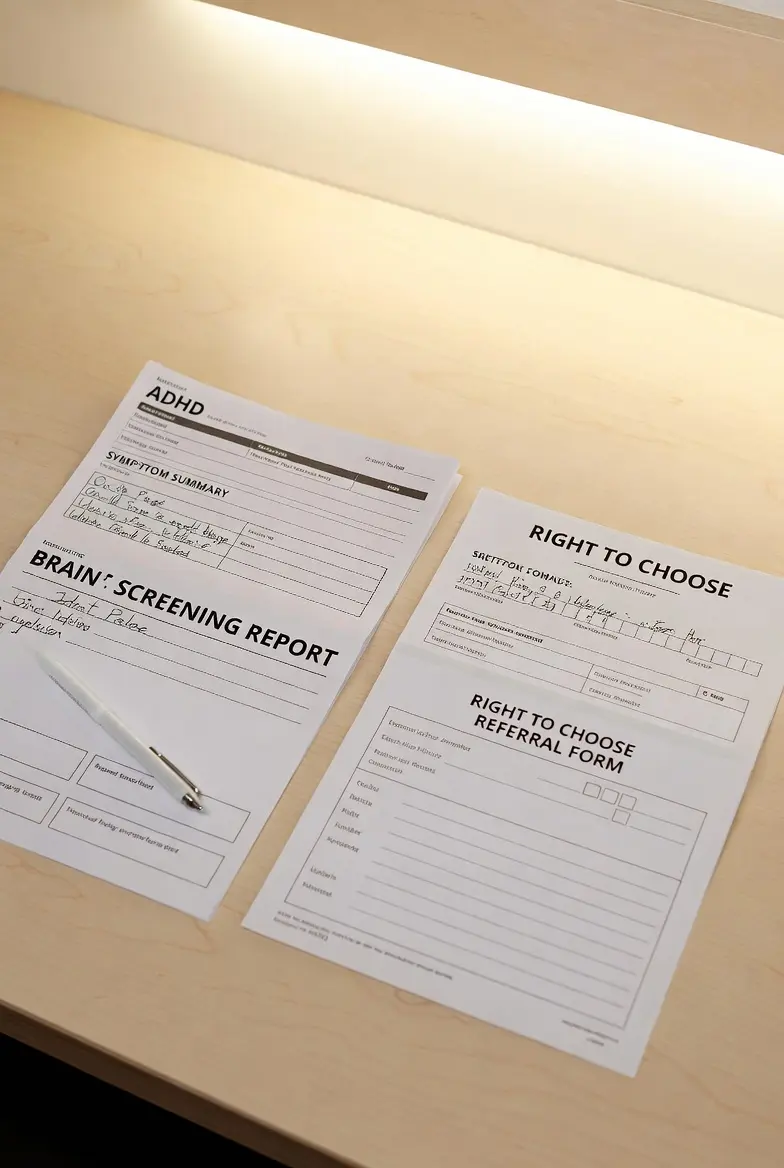
A psychiatric assessment is the formal pathway to ADHD diagnosis. Here’s what it involves, what it costs, how long it takes, and how objective brain data makes the process faster and more accurate.
An ADHD psychiatric assessment is a comprehensive clinical evaluation conducted by a GMC-registered psychiatrist or specialist clinician. It’s the formal process through which ADHD is diagnosed (or ruled out) in the UK — whether via the NHS, Right to Choose, or a fully private provider.
The assessment typically lasts 60–90 minutes and involves a structured clinical interview covering your current symptoms, childhood history, educational background, work performance, relationships, and mental health history. The clinician will also review any questionnaires you’ve completed (such as the ASRS for adults or Conners for children), school reports, and supporting evidence from partners, parents, or employers.
Based on all available information, the clinician makes a diagnostic decision using DSM-5 or ICD-11 criteria (NICE NG87). If ADHD is confirmed, they discuss treatment options — which may include stimulant medication (methylphenidate, lisdexamfetamine), non-stimulant medication (atomoxetine), behavioural strategies, coaching, or a combination.
The more evidence you bring, the more focused and efficient the assessment becomes. Ideally you’ll have: completed screening questionnaires (ASRS or Conners), old school reports showing childhood difficulties, written examples of functional impairment across multiple settings, and — crucially — objective brain data. Our comprehensive screening (£845) provides a clinical letter and theta/beta ratio z-scores that give your assessor an evidence base no other patient typically brings.
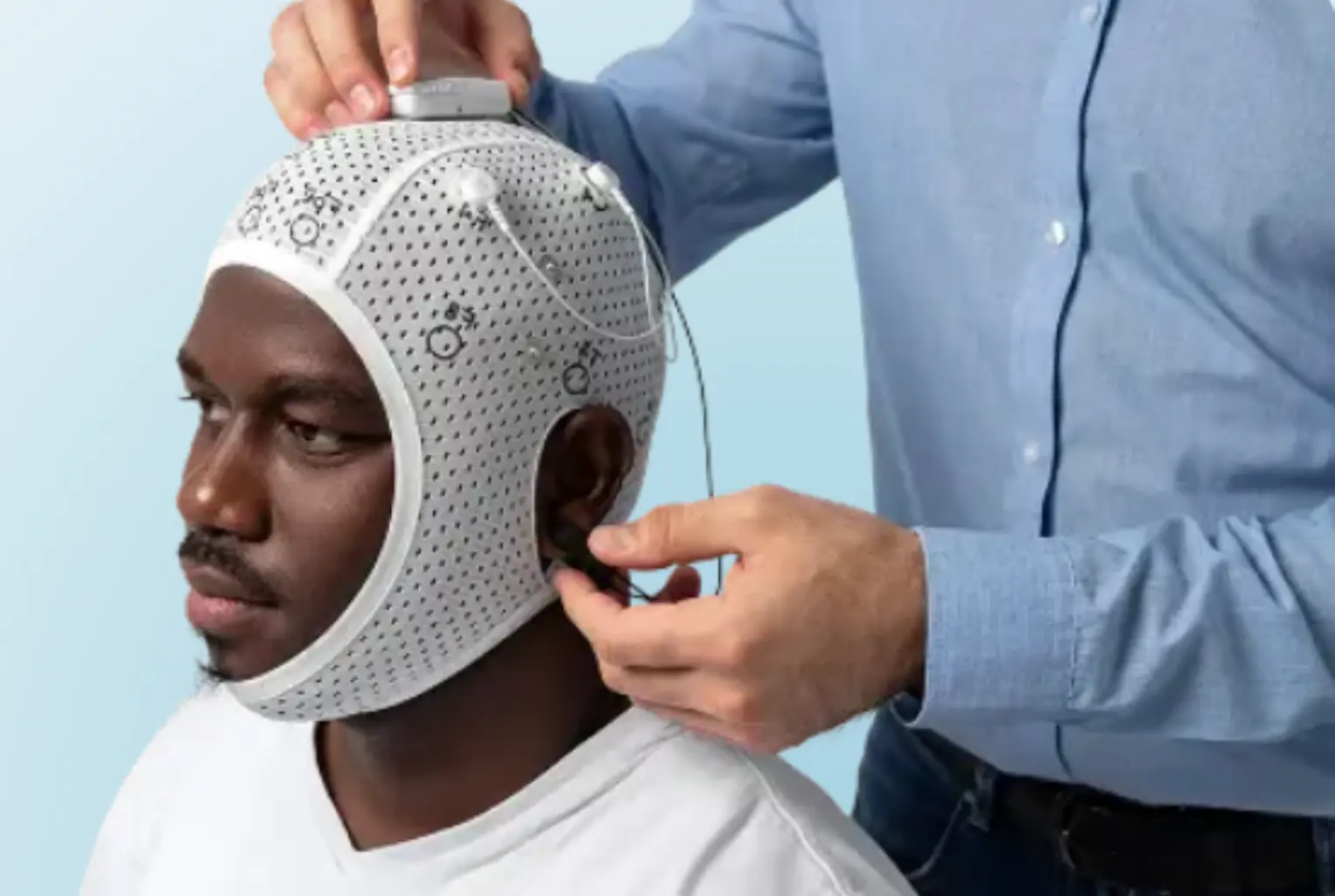
Our qEEG brain screening is an objective neurological measurement. It measures the theta/beta ratio — the most-studied EEG biomarker for ADHD — and compares it against age-matched published norms. It provides quantified data (z-scores) that any clinician can interpret. It does not diagnose ADHD. It provides evidence to support the diagnostic process. Think of it as the brain scan before the surgeon decides — the data that informs the clinical decision.
A psychiatric assessment is the comprehensive clinical process described above. A qualified clinician reviews all evidence — including our brain data, questionnaires, history, and clinical interview — and forms a diagnostic opinion. This is where diagnosis happens.
Diagnosis is the outcome of assessment. It’s the moment a qualified clinician confirms (or rules out) ADHD based on DSM-5/ICD-11 criteria. A diagnosis unlocks medication, formal workplace accommodations under the Equality Act 2010, and NHS-funded ongoing care.
Our screening occupies a unique position: it’s not assessment and it’s not diagnosis, but it provides the objective neurological evidence that makes both more accurate. The American Academy of Neurology found that combining theta/beta ratio data with clinical evaluation improves diagnostic accuracy to 89–94%. Learn more about the research on our science page.
Your GP refers you to your local NHS ADHD service (CAMHS for children, adult mental health for adults). The current average wait is 2–5 years. During that wait, there is no interim support, no medication, and no formal accommodations. The assessment itself is clinically thorough but based entirely on clinical interview and questionnaires — no brain measurement. It’s free at point of use, and once diagnosed, you receive ongoing NHS care including medication management. Read our full NHS waiting list guide.
Right to Choose is your legal right to be assessed by an NHS-approved private provider (typically Psychiatry-UK) at NHS expense. Wait time: 3–6 months. Your GP submits the referral. The assessment is conducted via video call and is clinically identical to an NHS assessment. If diagnosed, the provider sets up a shared care agreement with your GP for ongoing medication. Our clinical letter provides the evidence your GP needs to submit the referral confidently.
You pay £700–£1,500 for assessment by a private psychiatrist. Wait time: 2–8 weeks. The assessment is typically 60–90 minutes, either in person or via video. If ADHD is confirmed, the psychiatrist can prescribe medication immediately and write to your GP recommending shared care. This is the fastest route but the most expensive. Bringing our FDA-referenced brain screening data (£595–£845) makes the private assessment more efficient and evidence-based.
Most patients arrive with questionnaires and self-reported history. You arrive with objective neurological data — theta/beta ratio z-scores against published norms. Your assessor has an additional evidence stream no other patient typically provides.
Whether pursuing Right to Choose or NHS standard referral, a GP who sees objective brain data is significantly more likely to refer — and to write a stronger referral letter. Our GP evidence guide explains exactly what to say.
When a psychiatrist already has your TBR data before the appointment, they can focus the clinical interview on areas where brain data and behavioural evidence converge — rather than spending time establishing whether ADHD is even plausible.
If you’re diagnosed and prescribed medication, your pre-treatment brain data becomes invaluable. A follow-up medication comparison scan (£345) shows whether treatment is having the intended neurological effect.
Brain screening (£595–£845) + Right to Choose (free) is cheaper than a private assessment alone (£700–£1,500) — and you get objective brain data the private route doesn’t include. View all pricing.
While waiting for formal assessment, the same report supports school EHCP applications, Access to Work claims, and employer reasonable adjustments. One screening, multiple doors opened.
Most private providers send pre-assessment questionnaires (ASRS, DIVA, or Conners) to complete in advance. You may also be asked to provide old school reports, a developmental history, and an informant report from a partner, parent, or close friend who can describe your behaviour across settings. If you have our clinical letter and brain screening report, attach these to your pre-assessment paperwork.
The psychiatrist conducts a structured clinical interview. They’ll ask about your childhood (symptoms must have been present before age 12), current functioning across home/work/relationships, mental health history, family history of ADHD, and the specific impact on your daily life. They’ll also screen for coexisting conditions: anxiety, depression, autism, sleep disorders. If you’ve brought brain data, expect them to review the theta/beta ratio findings and integrate them into their clinical picture.
Based on all evidence, the clinician determines whether you meet DSM-5 criteria for ADHD. They’ll identify which presentation type (predominantly inattentive, predominantly hyperactive-impulsive, or combined) and the severity (mild, moderate, or severe). If ADHD is confirmed, they discuss treatment options.
If ADHD is confirmed, the most common first-line treatment is stimulant medication — typically methylphenidate (Concerta, Equasym) or lisdexamfetamine (Elvanse). The psychiatrist initiates medication, monitors titration over several weeks, and then writes to your GP recommending a shared care agreement for ongoing prescribing. Non-medication approaches include ADHD coaching, CBT adapted for ADHD, and workplace/educational accommodations.
Learn how our screening fits into the full process on our how it works page.
Private ADHD assessment costs range from £495 to £1,500 depending on the provider, location, and what’s included. Online assessments tend to be 10–15% cheaper than in-person. Children’s assessments are typically more expensive than adult assessments because they require informant reports from multiple settings.
| Pathway | Assessment cost | Wait time | Titration cost | Ongoing medication |
|---|---|---|---|---|
| NHS standard | Free | 2–5 years | Free (NHS) | NHS prescription (£9.90/item) |
| Right to Choose | Free | 3–6 months | Free (NHS) | NHS prescription via shared care |
| Private (budget) | £495–£795 | 2–6 weeks | £150–£400 | Private Rx until shared care (£50–£150/month) |
| Private (specialist) | £995–£1,500 | 1–4 weeks | Often included | Private Rx until shared care (£50–£150/month) |
| Brain screening + RtC | £595–£845 + free | 3–6 months | Free (NHS) | NHS prescription via shared care |
The assessment fee is just the beginning. After a private diagnosis, you’ll need medication titration — typically 3–6 follow-up appointments over 2–3 months while the psychiatrist finds the right medication and dose. Some providers include this in their assessment fee; many charge £150–£250 per follow-up. That’s an additional £450–£1,500 on top of the assessment.
During titration, you’ll also pay for private prescriptions. ADHD medication costs £50–£150/month privately (compared to £9.90 per item on NHS prescription). This continues until your GP agrees to a shared care arrangement — which can take 2–6 months after diagnosis. The total cost of the private route from assessment to stable shared care is realistically £1,500–£3,500.
Compare this to our brain screening (£595–£845) + Right to Choose (free) route: total cost under £850, with NHS-funded medication from day one after diagnosis. The wait is longer (3–6 months vs 2–8 weeks), but the lifetime cost saving is significant.
If you’re diagnosed privately, a shared care agreement (SCA) is the mechanism that transfers your ongoing prescribing from the private psychiatrist to your NHS GP. This means you stop paying private prescription costs and switch to NHS prescriptions (£9.90 per item, or free if you’re in Scotland, Wales, or have a prepayment certificate).
Once you’re on a stable medication dose (usually after 2–3 months of titration), your private psychiatrist writes to your GP with a shared care request. This letter details your diagnosis, the medication prescribed, the dose, and monitoring requirements. Your GP reviews the request and decides whether to accept. If they accept, they take over prescribing and the private psychiatrist provides ongoing clinical oversight (typically an annual review).
Not all GPs accept shared care agreements. Some are unfamiliar with ADHD medication, some have local policies that restrict shared care, and some simply don’t feel confident managing stimulant prescribing. If your GP refuses, you have options: request a different GP at the same practice, register with a different practice, ask your private provider to write a more detailed handover letter, or escalate through the practice’s complaints procedure. The NICE guidelines (NG87) support shared care for ADHD medication, so your GP should have a clinical reason for refusal.
This is another area where Right to Choose has an advantage: because the assessment is NHS-funded from the start, shared care is built into the pathway. There’s no “private to NHS transfer” required — your GP is already part of the process.
The private ADHD assessment market in the UK has grown rapidly, and not all providers are equal. Here’s what to check before booking.
GMC registration: Your assessing clinician should be on the GMC Medical Register. If they’re a psychiatrist, check they’re on the Specialist Register for psychiatry. CQC registration: Any clinic prescribing medication in England must be registered with the Care Quality Commission. You can search CQC ratings online. Professional body membership: membership of the Royal College of Psychiatrists indicates recognised specialist training.
Be cautious of providers who diagnose ADHD in under 30 minutes without reviewing developmental history, who guarantee a diagnosis before assessment, who don’t screen for differential diagnoses (anxiety, depression, sleep disorders, autism), who can’t provide a shared care letter for your GP, or whose prices are dramatically below market rate without explanation. A thorough assessment takes time — the 60–90 minute standard exists for a reason.
How long is the assessment? What questionnaires will I need to complete beforehand? Does the fee include the diagnostic report and GP letter? How many titration follow-ups are included? Do you provide shared care letters? What’s your process if ADHD isn’t diagnosed? Are you CQC registered? These questions help you compare providers on a like-for-like basis and avoid unexpected costs.
It’s easy to focus on the cost of assessment and feel it’s too expensive. But the cost of untreated ADHD is far higher. Research published in the British Journal of Psychiatry found that adults with ADHD in the UK have a reduced life expectancy compared to matched controls. The NHS ADHD Taskforce estimates untreated ADHD costs the UK approximately £17 billion per year.
On a personal level, untreated ADHD is associated with: lower lifetime earnings (estimated 15–25% reduction), higher rates of job loss and career instability, increased risk of relationship breakdown, significantly higher rates of anxiety, depression, and substance misuse, more frequent accidents and emergency hospital admissions, and higher rates of involvement with the criminal justice system.
The cost of a private assessment (£700–£1,500) or a brain screening + Right to Choose route (under £850) is a fraction of the lifetime cost of undiagnosed ADHD. Most clients tell us the screening was the single best investment they’ve made in their health.
Typically £700–£1,500 for the initial assessment. Some providers include follow-up titration appointments, others charge separately (£200–£500 for 3–6 sessions). Right to Choose via Psychiatry-UK is free — NHS-funded.
Private: 2–8 weeks. Right to Choose: 3–6 months. NHS standard: 2–5 years. Our brain screening gives you evidence to use whichever pathway you choose.
Strictly speaking, no — a psychiatrist can assess you without one. But presenting objective brain data gives them an additional evidence stream that improves diagnostic confidence. It also helps your GP justify the referral in the first place.
Our reports include peer-reviewed citations, z-scores, and transparent methodology. Private psychiatrists and Psychiatry-UK assessors have consistently engaged positively with the data. It’s an additional evidence stream, not a competing one.
An assessment can rule out ADHD as clearly as it confirms it. If ADHD isn’t diagnosed, the clinician will typically suggest alternative explanations and may refer for further investigation. Your brain data is still useful — a normal theta/beta ratio in the context of attention difficulties suggests other causes worth exploring.
Most private providers and Psychiatry-UK offer video assessments. The clinical interview works well remotely. Some providers offer in-person options. Our brain screening is done in person (at a venue or via home visit), but the subsequent psychiatric assessment can be remote.
The psychiatrist initiates medication (if appropriate), monitors titration over several weeks, then writes to your GP recommending shared care for ongoing prescribing. You may also be referred for ADHD coaching, CBT, or occupational therapy depending on your needs.
Yes. Private child ADHD assessment follows the same structure with age-appropriate modifications. Our children’s screening and family package provide the brain data to support the child’s assessment and any EHCP application.
The comprehensive package (£845). It includes the clinical interpretation letter that assessors, GPs, and schools want to see. The standard screening (£595) provides the data but without the formal letter. View all pricing.
We conduct screenings at private venues across Cheshire and the wider region, plus home visits nationwide. Same-week appointments typically available. Book online or call +44 161 570 1638.
After a private diagnosis, your psychiatrist writes to your GP requesting they take over ongoing prescribing. Once accepted, you switch from private prescriptions (£50–£150/month) to NHS prescriptions (£9.90/item). This usually happens 2–3 months after diagnosis, once your medication dose is stable. Not all GPs accept immediately — see our guide on navigating this process.
Verify the clinician is on the GMC Medical Register. Check the clinic is CQC registered if they prescribe medication. Ask whether the assessment follows NICE NG87 guidelines. Be cautious of providers who guarantee a diagnosis before assessment.
Realistically £1,500–£3,500 including assessment (£700–£1,500), titration follow-ups (£450–£1,500), and private prescriptions until shared care (£200–£600). Compare to brain screening + Right to Choose: under £850 total with NHS-funded medication from diagnosis.
Objective brain data that strengthens your psychiatric assessment. Same-day report. Clinical letter included.