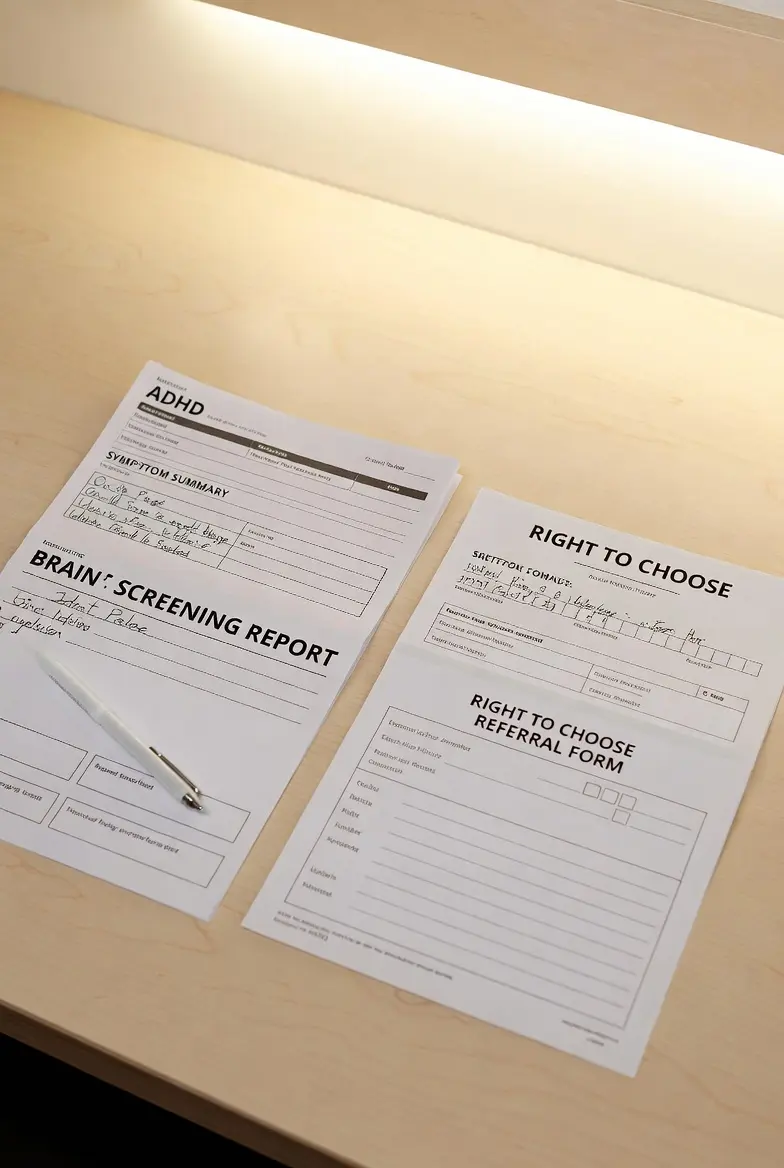
Your evidence pack does the heavy lifting
Screening report, clinical letter, and workplace impact statement. ATW assessors see self-reported symptoms every day — objective neurological data is what makes your application stand out.
Workplace coaching. Noise-cancelling headphones. Assistive technology. Funded by the government, not your employer. Access to Work pays for the support you need — you just need the evidence to apply. We provide it.
Access to Work (ATW) is a Department for Work and Pensions scheme that provides practical support and funding if you have a disability or health condition that affects your ability to work. ADHD qualifies because it’s recognised as a disability under the Equality Act 2010 when it has a substantial, long-term impact on day-to-day activities.
The scheme is massively underused. Many adults with ADHD have never heard of it. Those who have often assume they need a formal NHS diagnosis first. While a diagnosis strengthens the application, Access to Work can consider applications with strong supporting evidence — including objective neurological data from a qEEG brain screening. ADHD is recognised as a disability under the Equality Act 2010, and both ACAS and the Equality and Human Rights Commission confirm employers must consider reasonable adjustments alongside ATW funding.
Anyone aged 16 or over who is in paid employment (including self-employment), about to start a job, or doing a work trial. You must have a health condition or disability that affects your ability to work. ADHD — whether formally diagnosed or strongly evidenced — qualifies. You can apply even while on the NHS waiting list for formal diagnosis.
You apply to Access to Work directly — not through your employer. The assessor contacts you, not your employer. Some workplace adjustments may require your employer to cooperate with implementation, but the application and assessment process is confidential between you and the DWP.
Regular sessions with a specialist ADHD coach who helps you build systems for time management, prioritisation, task initiation, and organisation. Typically funded for 12–26 sessions per year. This is the most commonly approved ADHD support.
High-quality noise-cancelling headphones to reduce auditory distractions in open-plan offices. A simple accommodation that can dramatically improve focus for adults with ADHD. Usually approved quickly.
Software for task management, time blocking, text-to-speech, speech-to-text, and focus timers. May include hardware like a second monitor or standing desk if justified by the assessment. Some people receive tablets or specific apps.
Counselling or therapy sessions specifically related to workplace challenges caused by ADHD. Separate from NHS mental health provision — this is work-focused and funded by ATW.
If ADHD-related difficulties (such as executive function issues or anxiety) make commuting by public transport difficult, Access to Work can fund taxi fares or additional travel costs to get to work.
Support for meetings, note-taking, or managing workplace communication. May include a support worker for specific tasks or periods, or technology to help with email and project management.
| Support type | What it covers | Typical value |
|---|---|---|
| ADHD coaching | 12–26 sessions/year with a specialist ADHD workplace coach | £2,000–£4,000/year |
| Noise-cancelling headphones | High-quality headphones for open-plan offices | £250–£400 |
| Assistive technology | Task management software, focus timers, text-to-speech | £300–£1,500 |
| Equipment | Second monitor, standing desk, ergonomic setup | £200–£1,000 |
| Mental health support | Work-focused counselling or therapy sessions | £1,500–£3,000/year |
| Travel support | Taxi fares or additional commuting costs | Varies |
| Support worker | Note-taking, admin assistance, meeting support | £3,000–£15,000/year |
The exact support package depends on your individual assessment. The ATW assessor will discuss your specific workplace challenges and recommend support accordingly. Having clear evidence of your neurological profile — including how it specifically affects work tasks — helps them recommend the right support.
Before you apply, get your evidence in order. The strongest applications include:
Apply via the GOV.UK Access to Work application page or call the Access to Work helpline on 0800 121 7479. You’ll provide basic details about your job, your condition, and the difficulties you experience at work. The application itself is straightforward — it’s the evidence that determines the outcome.
An Access to Work assessor will contact you — usually by phone initially, sometimes with a workplace visit. They’ll discuss your specific challenges and review your evidence. This is where having objective data matters: a clinical letter showing elevated theta/beta ratio and impaired attention task performance demonstrates neurological need in a way that self-reported symptoms alone cannot.
If approved, ATW will fund the recommended support. Coaching and mental health support are arranged through approved providers. Equipment is ordered directly. The process from application to receiving support is typically 4–8 weeks.
After your application is accepted, Access to Work will arrange a workplace needs assessment. This is the stage where an independent assessor evaluates how ADHD affects your specific job and recommends the right support package. Understanding what to expect removes the uncertainty.
The assessor is usually employed by a contracted assessment company (not the DWP directly). They’ll contact you by phone or video call first. For employed applicants, a workplace visit may follow — though many assessments are now completed remotely, especially for hybrid or home-based roles. Self-employed applicants are typically assessed by phone or video.
The assessor will ask about your day-to-day work tasks and how ADHD specifically affects each one. They’re looking for concrete examples: difficulty sustaining attention during long reports, impulsive responses in emails, losing track of multiple projects, struggles with time management, sensory overload in open-plan offices, or problems with working memory during meetings.
Before the assessment, write down specific examples of how ADHD affects your work. Vague statements like “I find it hard to concentrate” are less useful than “I regularly miss email deadlines because I forget to check my inbox after hyperfocusing on another task for three hours.” The more concrete and work-specific your examples, the better the assessor can match you with the right support.
Bring your evidence to the assessment. If you have a clinical letter from a qEEG screening, a GP letter, or a formal diagnosis, have these ready. The assessor will review them alongside your verbal description. Objective data showing elevated theta/beta ratio or impaired attention task performance gives the assessor measurable evidence to reference in their recommendation report.
After the assessment, the assessor writes a recommendation report for the DWP. This typically includes specific support such as ADHD coaching sessions (usually 12–26 per year), equipment like noise-cancelling headphones or a second monitor, assistive software, and potentially travel support or a support worker. The DWP then reviews the recommendations and issues your funding award.
The entire process from assessment to receiving your first support is usually 2–4 weeks. Some equipment arrives faster; coaching takes slightly longer to arrange as you’ll need to choose a provider.
Not every application is approved first time. If your Access to Work application is refused or the recommended support is less than you need, you have options.
You can request a mandatory reconsideration within four weeks of the decision. Write to Access to Work explaining why you disagree with the decision. Focus on specific points: if the assessor didn’t fully understand how ADHD affects your work, if relevant evidence wasn’t considered, or if the recommended support doesn’t address the challenges you described. This is where having objective clinical evidence — rather than self-reported symptoms alone — becomes particularly valuable, because you can point to measurable data the assessor may have overlooked.
If you applied without strong supporting evidence, use the reconsideration period to gather more. A qEEG clinical letter tailored to workplace impact, a GP letter confirming ADHD is suspected or diagnosed, and a detailed workplace impact statement from yourself or your line manager all add weight. Several of our clients who were initially refused have been approved on reconsideration after adding objective neurological evidence to their application.
The most common reasons ATW applications for ADHD are refused include: insufficient evidence of a qualifying condition, the assessor concluding that reasonable adjustments from the employer would be sufficient, or the applicant not clearly linking ADHD to specific workplace difficulties. Addressing these specific gaps in a reconsideration significantly improves your chances.
Access to Work assessors see applications based on self-reported symptoms every day. What makes an application stand out is objective evidence. Our comprehensive package (£845) provides:
We can tailor the clinical interpretation letter to focus on workplace impact: how the neurological profile affects sustained attention on tasks, impulse control in meetings, executive function for project management, and task-switching between priorities. This directly addresses what ATW assessors need to see.
Even if you don’t yet have a formal ADHD diagnosis, a qEEG report showing elevated theta/beta ratio with z-scores against published norms — consistent with the NICE ADHD guidelines (NG87) recommendation for supplementary clinical evidence — provides measurable evidence of neurological difference. Several ATW assessors have accepted our clinical letters as supporting evidence alongside pending NHS referrals.
The Go/No-Go results in our report directly quantify the cognitive functions that matter most at work: sustained attention, impulse control, response consistency, and reaction time. An assessor can see exactly how these functions deviate from normative data.
One of the most common misconceptions is that you need a formal ADHD diagnosis before applying for Access to Work. You don’t. The scheme requires evidence of a health condition or disability that affects your ability to work — not necessarily a completed diagnostic process.
With NHS ADHD waiting lists stretching to 3–5 years in many areas, thousands of adults are stuck in a diagnostic limbo: they know (or strongly suspect) they have ADHD, their GP agrees, but they’re years away from a formal assessment. Access to Work was not designed to exclude these people.
The strongest pre-diagnosis applications combine multiple sources of evidence. A qEEG clinical letter showing objective neurological patterns consistent with ADHD provides measurable data that doesn’t depend on a formal diagnostic label. A GP letter confirming ADHD is suspected and you’re on the waiting list adds clinical backing. Your own detailed workplace impact statement ties the neurological evidence to specific job difficulties.
Several of our clients have been approved for Access to Work using this combination while still on the NHS waiting list. The assessor’s job is to evaluate whether you need workplace support — not to diagnose you. Objective evidence of attention difficulties, executive function impairment, and impulse control issues is often enough when presented clearly.
Yes — a formal diagnosis does make the application more straightforward. But “more straightforward” doesn’t mean “necessary.” If you’re struggling at work now and facing a multi-year wait for diagnosis, applying with strong supporting evidence is significantly better than waiting and struggling in silence. You can always update your ATW file with a formal diagnosis later, which may also unlock additional support during your renewal.
If you work from home — whether fully remote or hybrid — you can still apply for Access to Work. Your home counts as your workplace under the scheme. This is particularly relevant for adults with ADHD, where the home environment introduces its own set of challenges: household distractions, no external structure, difficulty separating work and personal time, and the absence of social accountability.
ADHD coaching is the most impactful support for remote workers. A coach helps you build daily routines, create external accountability structures, and develop systems for managing your workload without the natural structure of an office environment. Coaching sessions are typically delivered by video call, making them seamless for remote work.
Equipment and technology can also be funded for your home office: noise-cancelling headphones, a second monitor, focus timer software, task management apps, and ergonomic equipment like a standing desk. If ADHD-related executive function difficulties make your commute to hybrid office days unreliable, ATW may fund travel support for those days.
Self-employed people and freelancers qualify for Access to Work on the same basis as employees. If anything, the support can be more transformative: there’s no employer providing structure, no HR department making adjustments, and no colleague to remind you about deadlines. ADHD coaching funded by ATW gives self-employed people the external accountability that employed people get from their workplace by default. See our guide on adult ADHD screening if you’re self-employed and haven’t yet explored formal evidence for your application.
Separately from Access to Work, the Equality Act 2010 requires employers to make reasonable adjustments for employees with disabilities — including ADHD. These don’t require ATW funding; your employer is legally obligated to consider them:
Having a clinical letter supports these requests by providing your employer (or their occupational health provider) with objective evidence. You don’t have to disclose your full screening results — the clinical letter can be written to provide only what’s necessary for the workplace context. See also our guides on presenting evidence to your GP and Right to Choose for the full clinical pathway.
Access to Work funding is awarded for a support period, typically lasting one to three years depending on your circumstances. At the end of the period, you’ll go through a review process to assess whether the support is still needed and whether any changes are required.
For most ADHD support packages, renewal is straightforward. ADHD is a lifelong neurodevelopmental condition — the need for workplace support doesn’t go away. If your coaching, equipment, or other support has been effective, the review is an opportunity to continue or adjust it. If your job role has changed, or you’ve moved to a new employer, you can update your support package accordingly.
You should also reapply or request a review if your work circumstances change significantly: a new job, a promotion with different responsibilities, a move from employed to self-employed, or a change from office-based to remote working. Any of these could mean different support is more appropriate.
Equipment funded by Access to Work (noise-cancelling headphones, monitors, standing desks) is yours to keep even if your support period ends or you change jobs. Software licences may need renewing, which can be included in your next ATW application. Coaching sessions are funded per support period and would need to be re-approved at renewal.
A formal diagnosis strengthens the application, but ATW can consider applications with strong supporting evidence. Our clinical letter with objective brain data has been accepted by several assessors alongside pending NHS referrals. Having a GP letter confirming ADHD is suspected adds further weight.
Not for the application. You apply to Access to Work directly. However, some workplace adjustments may require your employer’s cooperation to implement (e.g. flexible hours, quiet workspace). You decide how much to disclose. Many people share only what’s needed for the specific accommodations.
Yes. Access to Work covers employed and self-employed people. Freelancers, contractors, and sole traders all qualify. The support is tailored to your working context — coaching for self-employed people often focuses on client management, deadline systems, and business organisation.
ATW can fund up to £66,000 per year in support. Most ADHD packages are well within this — typically £2,000–£5,000 for coaching plus equipment. The scheme covers the full cost of approved support. You and your employer pay nothing.
ADHD workplace coaching (12–26 sessions/year) and noise-cancelling headphones are the most commonly approved supports. Assistive technology, mental health support, and travel assistance are also frequently funded. The exact package depends on your assessment.
Typically 4–8 weeks from application to receiving support. The application itself is quick — the timeline depends on assessor availability and evidence quality. Having a strong clinical letter ready speeds up the process significantly.
The comprehensive package (£845) is recommended. It includes the clinical interpretation letter that ATW assessors require, tailored to workplace impact. The standard screening (£595) provides the data but without the formal letter. See pricing.
Yes. The report and clinical letter serve multiple purposes: GP referral, Right to Choose, Access to Work, and employer reasonable adjustment requests. We can tailor the letter’s focus for different recipients.
Yes. Even with a diagnosis, having objective brain data with z-scores and attention task results strengthens the ATW application. It provides specific, quantified evidence of functional impairment that goes beyond a diagnostic letter. It’s also useful for tracking medication effectiveness.
Macclesfield, Cheshire — accessible from Manchester (30 min), Stockport (20 min), Wilmslow (10 min), and the wider North West. Free parking. Same-week appointments usually available. Get in touch.
You can request a mandatory reconsideration within four weeks. Focus on addressing the specific reason for refusal — usually insufficient evidence or the assessor not fully understanding how ADHD affects your work. Adding objective evidence like a qEEG clinical letter at this stage significantly improves your chances.
Yes. Your home counts as your workplace under the scheme. Remote and hybrid workers can receive ADHD coaching (delivered by video call), assistive technology, noise-cancelling headphones, and other equipment for their home office. Many ADHD support packages are particularly valuable for home workers who lack the external structure of an office.
Support is typically awarded for one to three years. At the end of the period, you go through a review. Since ADHD is a lifelong condition, renewal is usually straightforward. Equipment you receive is yours to keep. Coaching sessions are re-approved per support period.
Objective brain data for your Access to Work application. Same-day clinical letter.